
usdt trc20 vs erc20 fees: A Practical Cost Guide
TRC-20 is often the cheaper route for USDT transfers, but the network label alone does not determine your cost. Compare wallet gas, platform withdrawal charges, and destination support before sending.
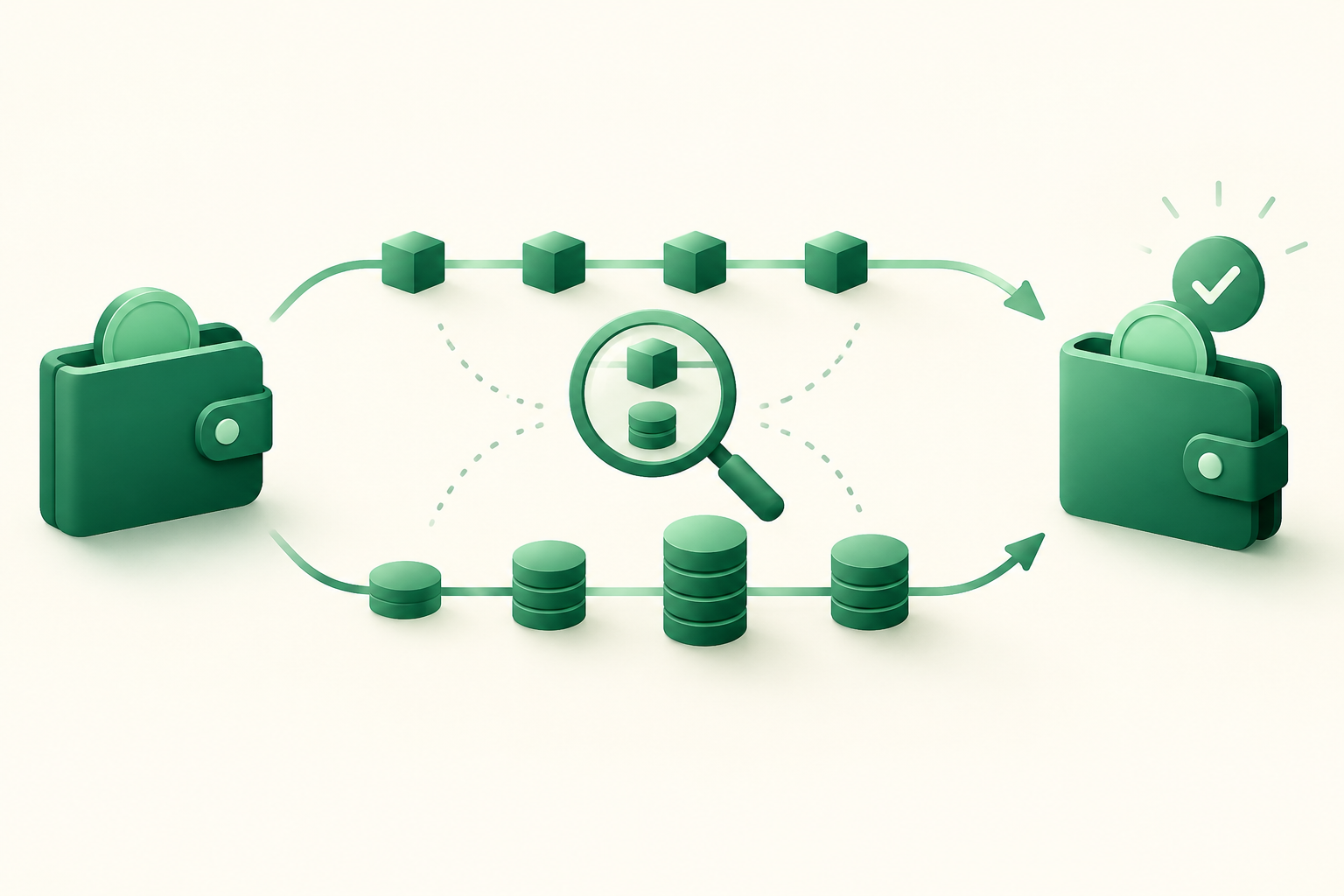
When comparing USDT TRC20 vs ERC20 fees, TRC-20 is often the lower-cost option, but it is not automatically cheaper for every transfer. Your actual cost depends on whether you send from a self-custody wallet or withdraw from a platform, the platform’s withdrawal charge, and the destination’s supported networks. Choose a compatible network first, then compare the final fee and amount the recipient will receive.
TRC-20 and ERC-20: What changes when you send USDT?
TRC-20 USDT runs on the TRON network. ERC-20 USDT runs on Ethereum. Both are versions of Tether’s dollar-linked token, but they use different blockchain infrastructure.
That distinction matters because a transfer must reach a destination that supports the selected network. Selecting “USDT” alone is not enough: the receiving service must accept USDT on TRON or Ethereum, as appropriate.
| What to compare | USDT on TRON: TRC-20 | USDT on Ethereum: ERC-20 |
|---|---|---|
| Blockchain | TRON | Ethereum |
| Self-custody transaction costs | Bandwidth and Energy resources; TRX may be burned when resources are insufficient | Gas paid in ETH |
| Platform withdrawal cost | Set by the sending platform | Set by the sending platform |
| Main compatibility check | Destination accepts USDT on TRON | Destination accepts USDT on Ethereum |
| Common cost consideration | Available resources affect the sender’s cost | Gas demand affects the sender’s cost |
A cheaper network is useful only if the recipient supports it. Sending through an unsupported network can leave funds inaccessible, and recovery is not guaranteed.
The three costs people confuse
A meaningful comparison separates the cost of buying USDT from the cost of moving it.
Blockchain transaction costs
When you send from a self-custody wallet, you are responsible for the resources needed to submit the transaction.
On Ethereum, sending ERC-20 USDT requires ETH for gas. The charge depends on the transaction’s gas usage and prevailing gas prices. Holding enough USDT does not mean you have enough ETH to send it.
On TRON, transactions use Bandwidth, while smart-contract interactions such as USDT transfers also consume Energy. If sufficient resources are unavailable, TRX can be burned to cover the shortfall. Available resources and network parameters affect the cost.
This is why “TRC-20 transfers are always free” and “ERC-20 always costs a fixed amount” are both misleading. Use your wallet’s current estimate rather than an old screenshot or a generic fee claim.
Platform withdrawal fees
If your USDT is held on a marketplace or exchange, the platform submits the blockchain transaction. You usually see a withdrawal fee instead of managing gas yourself.
That charge may be fixed or variable. It does not have to equal the blockchain cost of that particular transaction.
Compare the platform’s withdrawal preview for each supported network. A TRON withdrawal could cost more on one platform than an Ethereum withdrawal on another, even if TRON is often cheaper for direct wallet transfers.
Also check whether the fee is deducted from the amount entered or charged separately. The relevant outcome is what arrives, not just what you type into the withdrawal field.
Buying costs and payment charges
A low withdrawal fee does not guarantee a low total purchase cost.
For a P2P purchase, review:
- The offer’s exchange rate and any premium embedded in it.
- The marketplace’s buyer fee.
- Any fee charged by your bank or payment provider.
- The withdrawal fee, if you intend to move the USDT afterward.
- Any destination deposit requirements or charges.
Do not add a platform withdrawal fee and a separate blockchain gas estimate automatically. For a standard custodial withdrawal, the platform handles the network transaction; inspect the preview to see what it actually charges you.
Why TRC-20 is often cheaper—but not always the best choice
TRON can be an economical route for straightforward USDT transfers between services that support it. Ethereum gas can become expensive during periods of heavy demand, making small transfers particularly sensitive to transaction costs.
However, several situations change the decision.
Your destination requires Ethereum
If the destination only accepts ERC-20 USDT, sending TRC-20 is not a money-saving shortcut. You need a compatible route.
Moving funds between networks through another service can introduce withdrawal charges, conversion costs, and additional risks. A cheaper first transfer may produce a more expensive overall journey.
You already have usable TRON resources
A wallet with sufficient available resources may have a different out-of-pocket cost from one that must burn TRX for the transfer. Compare the estimate for your wallet, not somebody else’s experience.
For occasional users, buying or managing resources solely to optimize one transfer can add complexity. Avoid unfamiliar resource services without understanding their permissions, terms, and risks.
You plan to use Ethereum applications
If the USDT is intended for an Ethereum application, receiving it directly on Ethereum may avoid a later network change.
Remember that sending USDT to your wallet is not necessarily the last paid action. Approving an application to use tokens and interacting with it can require additional transactions and gas.
How VouchEx fees fit into the comparison
VouchEx is a P2P marketplace for USDT on TRON, using TRC-20, and Bitcoin. It is not an ERC-20 USDT route, so confirm TRON support at your destination before buying USDT for withdrawal.
Its published fee structure is:
- Buyer fee: 1% per completed trade.
- Seller fee: 1% per completed trade.
- USDT withdrawal fee: $2.
- Bitcoin withdrawal fee: $5, charged in BTC.
- Deposits: free.
The buyer and seller fees belong to their respective sides of the trade. A buyer should not automatically count both as direct buyer charges, although a seller’s offer rate can reflect their costs.
If you are buying USDT to send elsewhere, assess the offer rate, your 1% buyer fee, any payment-provider charges, and the $2 withdrawal fee. Check the trade and withdrawal previews for how the charges affect your payment and received amount.
You can browse marketplace offers to compare available payment terms. VouchEx supports hundreds of payment methods, including bank transfer, UPI, IMPS, PayPal, mobile money, and gift cards, in many local currencies. Availability depends on the offers you choose.
Step by step: Choose the right route before paying
Step 1: Start with the receiving account
Open the destination’s USDT deposit page and identify the supported network. Copy the deposit address from that page rather than reusing an address from an old message.
Check deposit minimums, any additional instructions, and whether deposits are currently available. An address that looks valid is not proof that a service will credit that network.
Step 2: Identify who pays the blockchain cost
For a self-custody transfer, inspect the wallet’s transaction estimate and your available ETH, TRX, or TRON resources.
For a platform withdrawal, use the platform’s quoted withdrawal charge. Do not assume it matches the network’s underlying cost.
Step 3: Compare the same end result
Compare routes that deliver the same usable amount of USDT to the same destination.
Ask: How much local currency will leave my payment account, and how much spendable USDT will arrive? This captures differences hidden by a favorable-looking offer rate or a cheap withdrawal headline.
For a small transfer, a fixed withdrawal fee takes a larger share of the amount. Combining planned withdrawals may reduce repeated fixed charges, but weigh that against keeping more funds on a platform.
Step 4: Check the trade terms before starting
On VouchEx, every trade uses escrow: the seller’s crypto is locked until they confirm receipt of payment. Buyers have a 15-minute payment window, so prepare your payment method before opening the trade.
Escrow protects the P2P exchange process; it does not fix a withdrawal sent through the wrong network. Keep those two safety checks separate.
Consult the help section if fee presentation or payment instructions are unclear.
Step 5: Verify the withdrawal preview
Before confirming, review:
- Asset: USDT, not a similarly named token.
- Network: exactly what the destination supports.
- Address: checked against the destination’s deposit page.
- Withdrawal fee and expected received amount.
- Destination minimum and any required instructions.
For an unfamiliar route, consider a small test transfer that meets the destination’s minimum. Remember that a second withdrawal may incur another fee.
VouchEx offers optional authenticator-app 2FA for withdrawals and releases. Enable it when you create your account, while still checking every transaction detail yourself.
FAQ
Is TRC-20 USDT always cheaper than ERC-20 USDT?
No. TRC-20 is often economical, but platform withdrawal pricing, TRON resources, Ethereum gas conditions, and destination requirements can change the result. Compare current quotes for your actual transfer rather than relying on a universal fee figure.
Do I need TRX or ETH to send USDT?
For a standard self-custody ERC-20 transfer, you need ETH for gas. A TRC-20 transfer uses TRON resources and may require TRX when those resources are insufficient. With a custodial withdrawal, the platform generally handles the network transaction and quotes its withdrawal fee.
Can I send TRC-20 USDT to an ERC-20 deposit address?
Do not send unless the destination explicitly supports the selected network. TRON and Ethereum are separate networks. If you already sent through an unsupported route, contact the receiving service with the transaction details; recovery may be unavailable.
Does VouchEx support ERC-20 USDT withdrawals?
VouchEx supports USDT on TRON, using TRC-20, and Bitcoin—not ERC-20 USDT. Its USDT withdrawal fee is $2. Confirm that your receiving wallet or service accepts TRC-20 USDT before using this route.
What is the fairest way to compare total fees?
Compare the total amount you pay with the usable USDT delivered to your destination. Include the offer rate, your trading fee, payment-provider charges, and applicable withdrawal or wallet transaction costs. Avoid double-counting gas already handled within a platform withdrawal.
Start Trading on VouchEx with 0% Listing Fees
Explore the open P2P software protocol.