
TRC20 USDT Explained: Networks, Fees, and Safe Transfers
TRC20 USDT is Tether’s dollar-pegged token on the TRON blockchain. Learn how to match networks, understand transfer fees, and avoid common mistakes when buying or moving it.
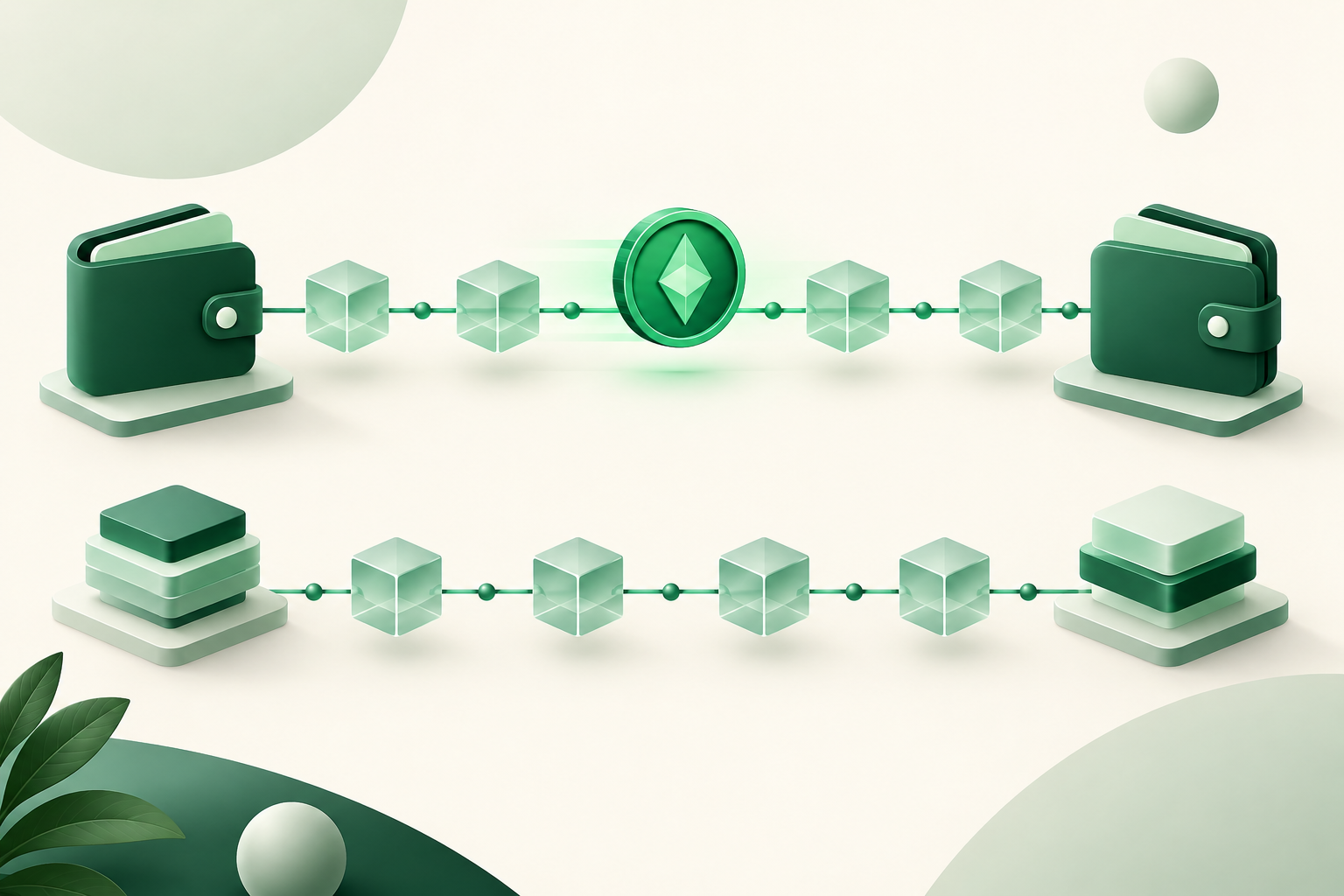
TRC20 USDT is USDT issued on the TRON blockchain using the TRC-20 token standard. USDT is a stablecoin issued by Tether and designed to track the US dollar; TRC-20 describes how the token operates on TRON. The most important practical rule is simple: when transferring it, both the sending and receiving services must support USDT on the TRON network.
If you have seen options such as USDT-TRC20 and USDT-ERC20 on a withdrawal screen, you are choosing a network—not a different dollar denomination. This guide explains what that choice means, which fees matter, and how to complete a transfer safely.
What do USDT, TRON, and TRC-20 mean?
These terms describe different parts of the same asset:
- USDT: The token, issued by Tether and intended to maintain a value close to one US dollar.
- TRON: The blockchain that records ownership and transfers of TRC20 USDT.
- TRC-20: The technical standard that defines how compatible tokens behave on TRON.
- TRX: TRON’s native asset, which is distinct from USDT and is relevant to network resources and fees.
Think of USDT as what you are sending and TRON as the delivery network. TRC-20 supplies the rules that let wallets and applications recognize and interact with the token.
The dollar peg is a target, not a guarantee. USDT can trade above or below its intended value, and its local-currency purchase price can also reflect exchange rates, seller pricing, and payment-method costs.
Is TRC20 USDT the same as ERC20 USDT?
Both are versions of USDT, but they operate on different blockchains. ERC20 USDT operates on Ethereum; TRC20 USDT operates on TRON.
They are not interchangeable at the transfer screen. A receiving service that accepts USDT on Ethereum does not necessarily accept USDT on TRON.
Sending a token does not automatically convert it to the network the recipient prefers. Changing networks generally requires a service that explicitly supports that process, such as an exchange offering deposits and withdrawals on the relevant networks. Check its requirements before moving funds.
How to recognize the right receiving address
Standard TRON receiving addresses usually begin with T. That is a useful clue, but it is not enough to approve a transfer.
A valid-looking TRON address does not prove that:
- The receiving platform supports TRC20 USDT deposits.
- The address belongs to your intended recipient.
- The deposit meets the platform’s minimum or other requirements.
- A token displayed as “USDT” is the authentic asset.
Open the recipient’s deposit screen and select USDT, followed by TRON, TRC20, or TRC-20, depending on its labels. Copy the address from that screen rather than from an old message or transaction history.
Compare the pasted address with the original. Clipboard malware can replace addresses, and scammers may place lookalike addresses in your transaction history. A familiar beginning or ending is not sufficient proof.
For a self-custody wallet, confirm that it supports TRON and the official USDT token. If you need to verify a token contract, use Tether’s official supported-protocol information rather than a contract address shared by a stranger.
TRC20 USDT fees: separate the different charges
There is no single universal “TRC20 fee.” Your total cost depends on whether you are trading, withdrawing from a platform, or sending from your own wallet.
Network costs from a self-custody wallet
TRON transactions use network resources, including Bandwidth and Energy. A USDT transfer interacts with a token contract, so its resource requirements differ from a simple TRX transfer.
Depending on the wallet and available resources, you may need TRX to cover the transfer. Some wallets or services offer resource management or sponsored-fee arrangements, but you should not assume yours does.
Holding USDT alone does not guarantee that you can send it. Review the wallet’s fee estimate and funding requirements before attempting a transfer. Network costs are not a permanently fixed dollar amount.
Platform withdrawal and trading fees
A platform can charge its own withdrawal fee rather than passing through the exact network cost of your transaction.
On VouchEx:
- Deposits are free.
- The buyer pays 1% per completed trade.
- The seller pays 1% per completed trade.
- The USDT withdrawal fee is $2.
The $2 withdrawal fee is VouchEx’s USDT withdrawal charge—not a universal TRON network fee. A later transfer from your personal wallet would have its own requirements.
Also compare the offer’s exchange rate and any payment-provider charges. A low headline fee does not necessarily produce the best final amount. Before accepting an offer, check what you will pay, what you will receive, and what withdrawing will cost.
Step by step: buy and transfer TRC20 USDT safely
VouchEx is a peer-to-peer marketplace for USDT on TRON and Bitcoin. P2P trading means buying from or selling to another person, with the platform providing the trading process and escrow.
1. Prepare the destination first
If you plan to withdraw after buying, confirm that your destination accepts TRC20 USDT before starting the trade.
Check the destination’s deposit minimum, confirmation requirements, and whether deposits are currently available. If you are using your own wallet, secure its recovery phrase offline. Never give that phrase to a seller, support contact, or website claiming it must “validate” your wallet.
2. Secure your trading account
You can create a VouchEx account and enable optional authenticator-app two-factor authentication. On VouchEx, this protects withdrawals and releases.
Use a unique password. ID verification is available for verified badges, but a badge is not a substitute for checking trade terms and payment details.
3. Choose an offer you can complete
Browse the USDT marketplace and compare the rate, amount limits, and payment instructions.
VouchEx supports hundreds of payment methods, including bank transfer, UPI, IMPS, PayPal, mobile money, and gift cards, across many local currencies. Choose an available offer whose payment method you understand and can use within the trade window.
Read the instructions before starting, not while racing to meet a deadline.
4. Pay within the trade process
Every VouchEx trade is protected by escrow: the seller’s crypto is locked until they confirm they received payment.
Buyers have a 15-minute payment window. Follow the trade instructions and provide payment information accurately. Do not mark a payment as completed before actually sending it, and do not send a second payment simply because the seller says the first has not arrived.
Keep payment records and communications within the trade wherever possible. Escrow protects the crypto side of the transaction; it does not make every payment method irreversible or prevent every form of deception.
5. Confirm completion before withdrawing
After the seller confirms receipt and releases the crypto, check your available balance.
If something goes wrong, consult the VouchEx help section. Disputes can be opened 3 hours after a trade starts. The person opening the dispute pays 1% of the trade, and moderators aim to resolve disputes within 2 hours. That is a resolution target, not a guaranteed outcome or deadline.
6. Review and send the withdrawal
Select USDT and verify that the destination accepts TRON/TRC20. Check the address, amount, withdrawal charge, and expected received amount before confirming.
For a new destination, consider a small test transfer first. Make sure it exceeds any deposit minimum, and remember that a separate withdrawal adds another withdrawal fee.
A successful test confirms that particular route worked. It does not remove the need to check the address and network on your next transfer.
How to check a transfer that has not arrived
First distinguish between a withdrawal request and a blockchain transaction. A platform may still be processing a request before it broadcasts anything to TRON.
Once a transaction ID is available, look it up in a reputable TRON block explorer. Check:
- Whether the transaction succeeded or failed.
- Whether the destination matches your deposit address.
- Whether the token transfer shows the expected asset and amount.
- Whether the receiving service’s confirmation requirements have been met.
A successful on-chain transfer can still be waiting for a receiving platform to credit it. Check deposit minimums, maintenance notices, and network support before contacting that platform with the transaction ID.
Never share a recovery phrase or private key to get a transfer investigated. Anyone asking for those credentials can take control of your wallet.
What TRC20 USDT does not protect you from
Using the right network prevents one common mistake, but it does not remove other risks.
USDT has issuer and peg risk, and the issuer can freeze tokens at certain addresses. Keeping funds on a platform also introduces custody risk; keeping them in your own wallet makes key security your responsibility.
Blockchain transfers generally cannot be reversed by the sender. If you send to the wrong address or an unsupported network, recovery may be impossible. Sometimes a receiving service can help, but this depends on its technical control and policies.
The safest habit is to treat every transfer as a fresh checklist: correct token, supported network, verified address, understood fees.
FAQ
What is TRC20 USDT in simple terms?
It is Tether’s USDT token running on the TRON blockchain. USDT identifies the asset, while TRC-20 identifies the token standard used on that network.
Do I need TRX to send TRC20 USDT?
From a self-custody wallet, you may need TRX unless sufficient network resources or a supported fee arrangement cover the transfer. When withdrawing from a platform, follow that platform’s fee rules instead.
Can I send TRC20 USDT to an ERC20 address?
Do not do so unless the receiving service explicitly provides a supported process for that route. Ordinary transfers do not convert networks, and an unsupported deposit may be unrecoverable.
Is TRC20 USDT always cheaper than ERC20 USDT?
No. Compare the actual withdrawal quote or wallet fee estimate at the time. Platform pricing and network conditions can differ, so the network label alone does not establish your total cost.
How long does TRC20 USDT take to arrive?
There is no guaranteed end-to-end time. Arrival depends on the sender broadcasting the transaction, blockchain processing, and any receiving-platform confirmation or crediting requirements. Use the transaction ID to distinguish an on-chain delay from a platform-processing delay.
Start Trading on VouchEx with 0% Listing Fees
Explore the open P2P software protocol.