
How to sell usdt for inr: A Seller’s Practical Guide
Selling USDT for INR means choosing a suitable buyer, checking the full cost, and confirming payment before releasing crypto. Follow this practical guide to avoid common payment and escrow mistakes.
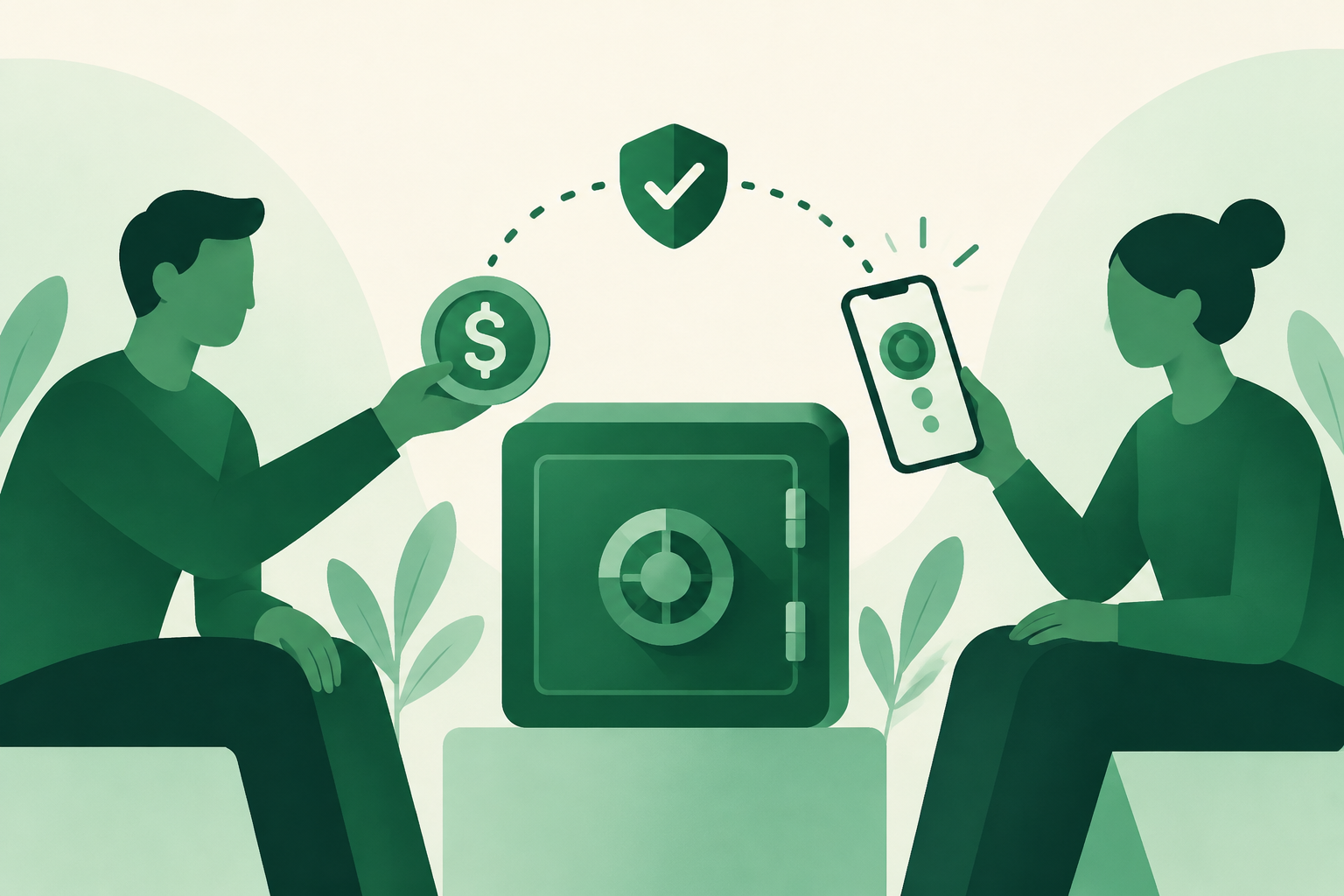
To sell USDT for INR, choose a peer-to-peer buyer who pays in Indian rupees, agree to the rate and payment method, and start an escrow-protected trade. Verify that the full payment has actually arrived in your own bank or payment account before releasing your USDT. On VouchEx, USDT uses the TRC-20 network, and the seller pays a 1% fee per completed trade.
The essential distinction is simple: a buyer saying “paid” is not the same as your account receiving money. This guide explains how to choose an offer, assess your proceeds, and handle the payment safely.
Understand what you are selling—and how you get paid
In a P2P trade, you sell crypto to another person rather than placing a sell order against an exchange order book. The buyer sends INR through the agreed payment method, while the marketplace holds your crypto in escrow.
VouchEx is a P2P marketplace for USDT on TRC-20 and Bitcoin. Every trade uses escrow: the seller’s crypto is locked until the seller confirms receipt of payment.
For an INR sale, UPI, IMPS, or bank transfer may be suitable options. VouchEx supports these alongside hundreds of other payment methods in many local currencies. However, platform support does not guarantee that a suitable buyer is available when you want to trade. Check current offers, limits, and terms.
Escrow controls the crypto release; it does not make every incoming payment risk-free. You still need to check the payment yourself and watch for mismatched senders or suspicious requests.
Compare the actual outcome, not just the advertised rate
A high INR-per-USDT rate can look attractive while hiding an inconvenient payment method, restrictive conditions, or costs elsewhere in the process.
Before choosing a buyer, review:
- Rate: How much INR will the agreed crypto amount fetch?
- Trade limits: Does your intended sale fit the buyer’s minimum and maximum?
- Payment method: Can you receive and independently verify it?
- Payment conditions: Are the instructions clear and acceptable before you start?
- Fees: What will you pay to complete the sale and move any remaining crypto?
Account for VouchEx fees correctly
VouchEx charges 1% to the seller and 1% to the buyer per completed trade. Your direct platform trading fee as the seller is 1%; do not automatically add the buyer’s fee to your own fee calculation.
Deposits are free on VouchEx. If you send USDT from another wallet or platform, check whether that service charges an outgoing transfer or network fee. A free receiving deposit does not necessarily make the whole transfer free.
The USDT withdrawal fee is $2. Distinguish a crypto withdrawal from receiving INR from your buyer: they are different actions. Check the trade summary for how the trading fee affects the crypto amount required and the expected proceeds.
A useful comparison is your effective INR return: the rupees you receive relative to the total USDT spent, including applicable crypto-denominated costs. Compare offers on the same basis rather than mixing pre-fee and post-fee figures.
Step by step: sell USDT for INR on VouchEx
Step 1: Secure your account before funding it
Create a VouchEx account if you do not already have one. Use a unique password and enable optional authenticator-app 2FA, which protects withdrawals and releases.
ID verification is available for verified badges. Treat a badge as an additional signal, not a substitute for checking payment or reading trade terms.
Prepare the account you will use to receive INR. Make sure you can access its transaction history directly rather than relying only on notifications.
Step 2: Check the USDT network before transferring
VouchEx supports USDT on TRC-20. Confirm that the sending service is using the same supported network and carefully check the destination address.
Do not assume that every transfer labelled “USDT” is compatible. If the sending platform offers several networks, verify your selection before authorising the transfer.
Check the available balance before starting a sale, and review any fee requirement shown in the trade summary. Avoid committing to a trade while still troubleshooting a deposit.
Step 3: Find a buyer whose terms fit your sale
Visit the VouchEx marketplace and look for someone buying USDT with INR through a payment method you can accept. Remember the direction: you are selling USDT, so the counterparty must be buying it.
Read the entire offer. Check the rate, amount limits, payment instructions, and any conditions that could affect settlement.
Anyone can also post a buy or sell offer for free on VouchEx, with no merchant deposit. Posting your own sell offer lets you set out your preferred terms, but it does not guarantee an immediate match.
Step 4: Confirm the details and start the escrow trade
Before proceeding, check the USDT amount, expected INR payment, receiving details, and platform fee. Resolve unclear terms before committing.
Once the trade starts, your crypto is locked in escrow. Keep payment instructions and discussion within the platform’s trade communication wherever possible, so there is a clear record if something goes wrong.
Provide only the details needed to receive payment. Never share your password, authenticator code, UPI PIN, or banking OTP.
Step 5: Wait for payment and verify it independently
Buyers have a 15-minute payment window on VouchEx. During that period, watch your own receiving account rather than relying on a screenshot or a message from the buyer.
Before releasing, check:
- The full agreed INR amount is credited.
- The entry is an incoming payment, not a request for you to pay.
- The transaction is not merely pending.
- Sender details and the payment reference are consistent with the trade, where visible.
- There is no unexplained split payment or third-party sender.
Open your banking or payment app yourself. Do not follow a buyer’s link to “verify” the transfer. Receiving a UPI payment should not require authorising an outgoing payment or entering your UPI PIN to collect money.
Step 6: Release only after the checks pass
When you have independently confirmed full payment and resolved any discrepancies, release the USDT through the trade process. Do not release because a buyer claims urgency, sends a convincing receipt, or promises the balance later.
After completion, save the trade details, payment reference, and fee record. These can help with reconciliation, banking questions, or tax reporting.
What to do when payment does not match the trade
The safest response to uncertainty is to pause the release and document the problem. Do not improvise a side deal to make an awkward transaction disappear.
The buyer says “paid,” but nothing has arrived
Check your account directly and ask for the payment reference within the trade conversation. A reference may help trace a transfer, but it is not proof that your account has been credited.
If the payment window passes, follow the status and instructions shown on the platform. Do not assume that the timer alone proves payment failed or that the trade has automatically cancelled.
The amount or sender is unexpected
If payment is short, split across unexplained accounts, or sent by an unrelated person, do not release immediately. Ask for clarification and seek support if the discrepancy remains unresolved.
If someone requests a refund to a different account, pause. That can create a separate loss even while your crypto remains in escrow. Keep the records and ask for guidance before moving money.
You need a dispute
On VouchEx, disputes can be opened 3 hours after a trade starts. The person opening the dispute pays 1% of the trade, and moderators aim to resolve disputes within 2 hours. That resolution target is not a guaranteed deadline.
Keep the order details, conversation, payment references, and relevant account evidence. Use the help centre for guidance, and share sensitive records only through appropriate support channels. Do not disclose login credentials or security codes.
Keep records and allow for banking risks
A credited payment is the essential release check, but it is not a promise that a bank transfer can never be questioned later. Payments connected to fraud reports can create banking complications even after a P2P trade appears complete.
Keep a clear record of what you sold, what you received, the counterparty details available in the trade, and the fees paid. Avoid offers involving misleading payment descriptions or unexplained third-party accounts.
Selling USDT may also have Indian tax and reporting implications. Platform fees are not a substitute for tax compliance. Check current official guidance or consult a qualified Indian tax professional about your circumstances.
FAQ
Can I sell USDT for INR using UPI?
Yes, if you find a buyer offering INR payment through UPI with suitable limits and terms. VouchEx supports UPI, but current offer availability varies. Verify the credit in your own account before releasing USDT.
Which USDT network does VouchEx support?
VouchEx supports USDT on TRC-20. Confirm the network and destination address before sending funds from another wallet or platform. Do not assume USDT sent over a different network will be credited.
How much does it cost to sell USDT on VouchEx?
The seller pays 1% per completed trade; the buyer separately pays 1%. Deposits are free, and USDT withdrawals cost $2. Check any sending-platform costs separately and review the trade summary before proceeding.
How long does it take to receive INR?
Buyers have a 15-minute payment window, but that is not a guaranteed bank-credit or trade-completion time. Payment processing and any discrepancies can affect the outcome. Release based on confirmed receipt, not elapsed time.
Should I release USDT if the buyer sends a payment screenshot?
No—not on the screenshot alone. Check your own account for the full incoming payment and investigate discrepancies. Escrow protects your control over the crypto only while it remains locked; do not give up that control based on a promise or receipt image.
Start Trading on VouchEx with 0% Listing Fees
Explore the open P2P software protocol.