
Sell USDT for Ghana Cedis to a Bank Account: A Safe Plan
Selling USDT for cedis by bank transfer means choosing a suitable buyer, checking your actual payout, and confirming payment before release. This guide explains the process, costs, and warning signs for a Ghana bank-account cash-out.
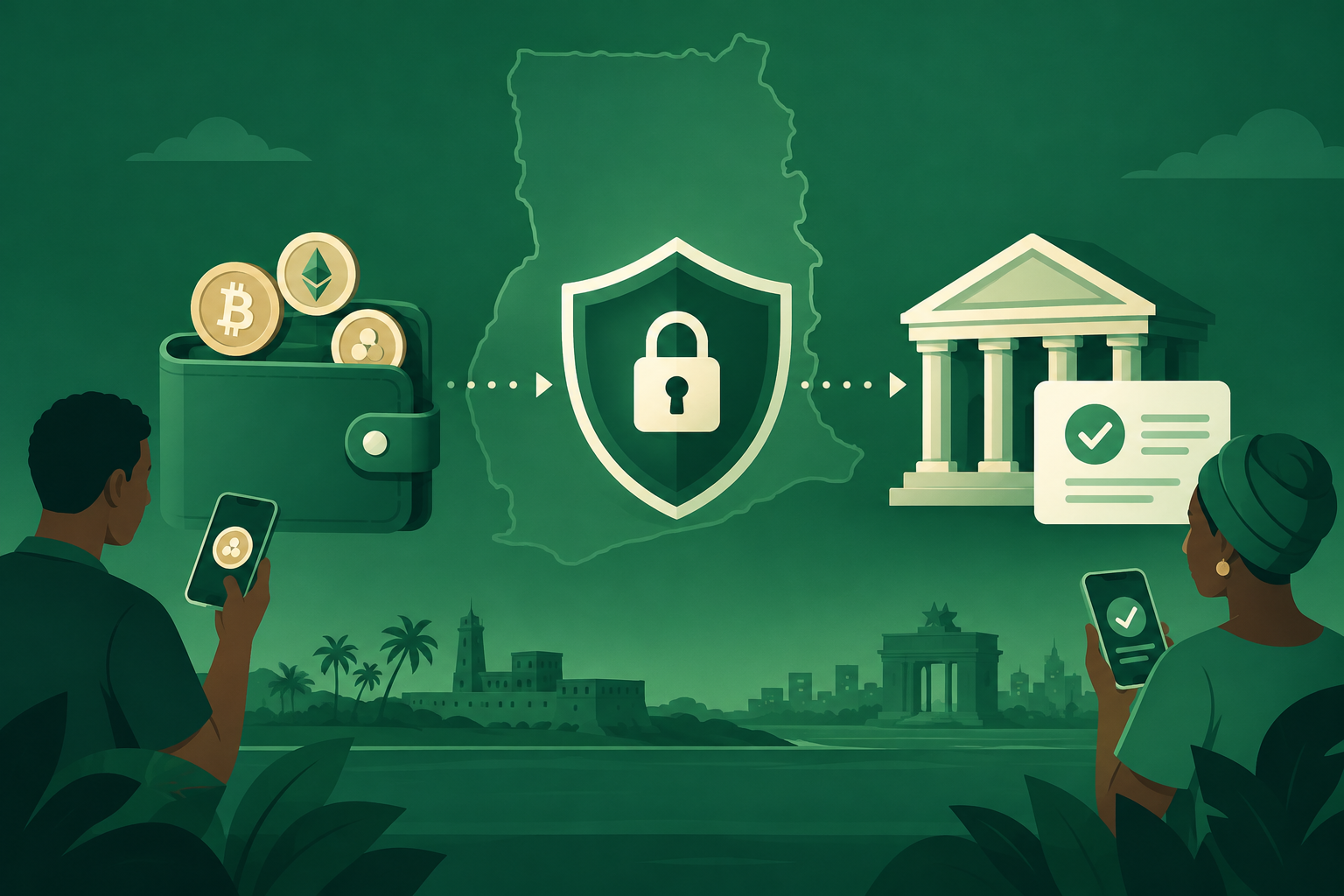
You can sell USDT for Ghana cedis to a bank account through a peer-to-peer marketplace by finding a buyer who pays GHS by bank transfer, locking your USDT in escrow, and releasing it only after you independently confirm payment in your bank account. On VouchEx, USDT trades use the TRC-20 network. First check whether a suitable GHS bank-transfer offer is available; support for many currencies and payment methods does not guarantee a matching buyer at every moment.
What a Ghana bank-account cash-out actually involves
In a P2P sale, another person buys your USDT and sends the agreed cedi payment to your bank account. The bank transfer is the buyer’s payment, not a withdrawal of cedis from a crypto wallet.
VouchEx protects every trade with escrow: the seller’s crypto is locked until the seller confirms they received payment. This prevents the buyer from receiving your escrowed USDT before you release it, but it does not verify your bank balance for you or eliminate bank-payment risks.
For this cash-out route, match three things:
- Asset and network: USDT on TRC-20.
- Settlement currency: Ghana cedis, usually shown as GHS.
- Payment method: bank transfer to your own Ghana bank account.
Mobile money is a different payment route. An offer mentioning Ghana or GHS is not enough if it pays only to a mobile wallet and your goal is a bank deposit.
Compare the cedis you keep, not just the advertised rate
A high GHS-per-USDT rate can look attractive while unsuitable limits, fees, or payment conditions make the offer impractical.
Before committing, establish the exact USDT amount involved, the cedi payment due, and how the seller fee affects your total crypto debit or trade amount. Do not assume a fee is deducted from the bank payment itself.
The relevant VouchEx fees
VouchEx charges 1% to the seller and 1% to the buyer per completed trade. Deposits are free. Withdrawing USDT from VouchEx costs $2.
That withdrawal fee is separate from the seller’s trading fee. Receiving GHS from a buyer into your bank account is not itself a USDT withdrawal. If you later move remaining USDT to an external wallet, the crypto withdrawal fee becomes relevant.
Your sending wallet or exchange may charge for moving USDT to VouchEx, even though VouchEx does not charge a deposit fee. Check any bank charges separately rather than assuming the transfer is cost-free.
A useful comparison is:
Effective cash-out rate = cedis retained after applicable cash charges ÷ total USDT spent on the cash-out.
Include the seller fee in your cost comparison without counting it twice. If the trade summary does not make the calculation clear, clarify it before starting.
Check whether the offer fits your bank payment
Read the payment terms as carefully as the rate. Confirm:
- The buyer pays GHS by bank transfer, not another method.
- Your intended sale falls within the offer’s limits.
- The buyer can send to your receiving bank.
- The expected transfer timing fits your availability to check receipt.
- The terms do not require early release or off-platform coordination.
A slightly better rate is not worth accepting a payment route you cannot verify confidently.
Step by step: sell USDT and receive cedis safely
1. Prepare your account and receiving bank details
Make sure you can sign in to your bank’s official app or online banking and inspect incoming transactions. A working SMS inbox alone is not enough.
Prepare the correct bank name, account name, and account number. Confirm that your account can receive the intended amount and review your bank’s current terms concerning crypto-related transfers.
Enable VouchEx’s optional authenticator-app 2FA, which protects withdrawals and releases. Share only the receiving details needed for payment—never your banking password, PIN, or one-time authentication code.
2. Find a buyer offering GHS bank transfer
Check the marketplace for offers from people buying USDT. You are selling crypto, so you need a buyer, even if the marketplace groups offers under a particular buy or sell view.
Assess the stated terms and any available profile information. VouchEx offers ID verification for verified badges, but a badge is not a guarantee that a payment is safe.
If no suitable offer exists, anyone can post a buy or sell offer free of charge, with no merchant deposit. Posting your own sell offer may help you state your GHS bank-transfer requirements, but it does not guarantee a buyer or immediate payment.
3. Fund with the correct USDT network
VouchEx supports USDT on TRC-20. Follow the deposit instructions shown in your account and check the receiving address and network before sending.
Do not send USDT using another network simply because the token has the same name. Network mismatches can put funds at risk.
Check the sending service’s charges and allow for the seller fee when deciding how much USDT you need. Recheck the offer before opening the trade, since availability or terms may have changed while you funded your account.
4. Confirm the agreement and escrow status
Before proceeding, verify the USDT amount, GHS payment due, bank-transfer method, and displayed fees. Make your expectation explicit that payment should come from an account belonging to the buyer, rather than an unrelated person.
Keep payment instructions and any clarification in the trade conversation. That creates a record if the transaction needs review.
Confirm that the trade has started and your crypto is in escrow. Do not send USDT directly to the buyer as an alternative to the escrow process.
5. Check your bank—not the buyer’s screenshot
Buyers have a 15-minute payment window. A buyer marking a payment as sent, however, does not establish that your bank received it.
Open your bank’s official app or website independently and inspect the transaction. Check:
- The credited amount matches the agreed GHS payment.
- The money reached the correct account.
- The transaction is not merely pending or scheduled.
- The sender information is consistent with the agreed payer.
- The funds are available, with no unexplained restriction.
Do not rely on a screenshot, forwarded SMS, email, or payment-confirmation link supplied by the buyer. Avoid following links that ask you to log in to “accept” the transfer.
If the bank entry is unclear, contact your bank through an official channel. Even an available credit is not an absolute guarantee against a later fraud investigation or reversal.
6. Release only when the payment checks pass
Release your escrowed USDT only after confirming the full agreed payment. Do not release against a promise that a missing balance will arrive later.
Save the trade record, fee details, bank transaction reference, and relevant messages. These records help with bank questions, disputes, and any reporting obligations that apply to you.
What to do when payment does not look right
The buyer says they paid, but nothing has arrived
Keep the crypto in escrow. Ask for the transfer reference within the trade conversation and continue checking through your bank’s official channels.
The payment window is not a reason to release unreceived funds. Do not assume that expiry of the window proves either success or failure; follow the platform’s available instructions for the trade’s status.
The payment comes from someone else
An unexplained sender-name mismatch is a warning sign. It could indicate a third-party payment or another situation requiring investigation.
Pause rather than accepting “my friend paid” as sufficient proof. Ask for clarification in the trade record and seek platform guidance. Do not send a refund to a different account supplied in chat; involve your bank and platform support before moving questionable funds.
The amount is short, excessive, or split unexpectedly
Do not let a buyer change the agreed terms after payment. A short payment should not trigger full release, and an overpayment followed by a request to refund another account deserves particular caution.
Unexpected payments from multiple people also complicate verification. Preserve the records and seek help rather than improvising a settlement outside the trade.
You need a dispute review
On VouchEx, disputes can be opened 3 hours after a trade starts. The person opening the dispute pays 1% of the trade, and moderators aim to resolve disputes within 2 hours. That is a resolution target, not a guaranteed deadline.
Prepare the trade details, relevant messages, transfer references, and bank evidence. Redact unrelated sensitive information without obscuring the payment details under review. Consult the help section for guidance while keeping the disputed crypto unreleased.
A final check before you cash out
A successful sale is not simply one with a strong advertised rate. It is one where the agreed cedis arrive through a payment route you understand, the costs are clear, and your release decision rests on bank evidence.
If you are ready to proceed, create your VouchEx account, enable 2FA, and check current offers before moving funds. Keep your bank’s rules and any applicable Ghanaian tax or reporting obligations separate from the marketplace’s trade process; marketplace access does not establish legal or banking approval.
FAQ
Can I receive Ghana cedis directly into my bank account?
Yes, if you find a buyer who agrees to pay GHS by bank transfer to your account. Check current offer availability, payment terms, and limits before funding or starting a trade.
Does VouchEx support every USDT network?
The supported USDT network is TRC-20. Use the deposit instructions in your account and match the sending network exactly. Do not treat USDT on other networks as interchangeable for deposits.
How much does selling USDT cost?
VouchEx charges the seller 1% per completed trade. Deposits are free, while an external USDT withdrawal costs $2. Sending-wallet and bank charges, if applicable, are separate costs to check.
Should I release USDT when the buyer sends a receipt?
No. A receipt or screenshot is not proof that your account received the money. Independently verify the full payment through your bank before releasing escrow.
Is the 15-minute payment window a guaranteed cash-out time?
No. It is the buyer’s payment window, not a promise that your bank will credit the transfer within that period. Transfer delays or payment problems can require additional checks or a dispute.
Start Trading on VouchEx with 0% Listing Fees
Explore the open P2P software protocol.