
sell bitcoin for zar with instant eft: A Seller’s Checklist
Selling Bitcoin for rand starts with finding a compatible buyer—not trusting an “instant” payment label. Use this checklist to compare offers, verify bank receipts, and release BTC with fewer avoidable risks.
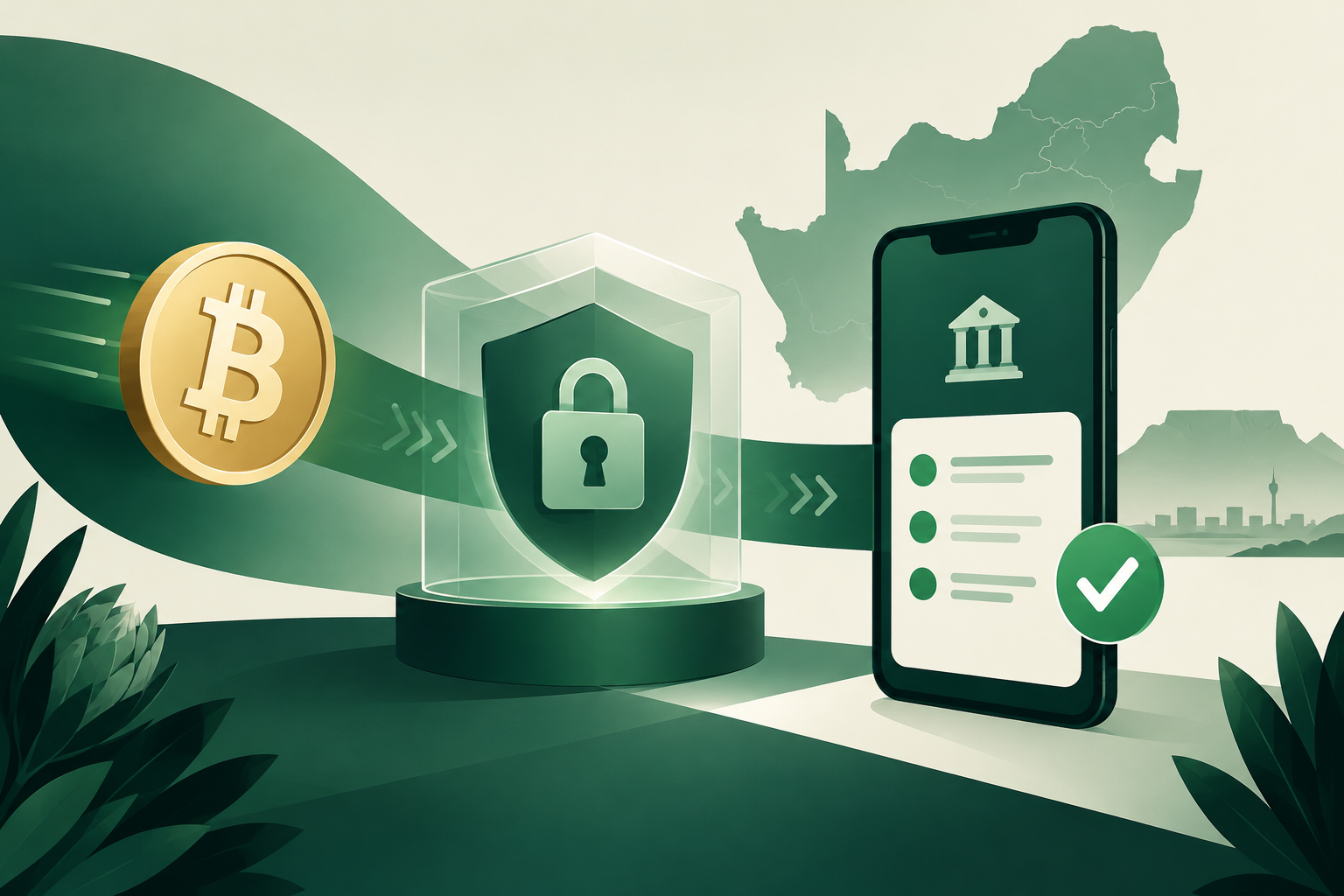
You can sell bitcoin for ZAR with instant EFT through a peer-to-peer marketplace by finding a buyer who pays South African rand using a compatible bank-payment method. The safe sequence is to agree on the payment terms, lock your BTC in escrow, check the incoming money in your own banking app, and only then release the Bitcoin. On VouchEx, check current offers first: a broad range of payment methods does not guarantee that a suitable ZAR instant-EFT buyer is available when you need one.
What “instant EFT” means for your Bitcoin sale
For a South African seller, the goal is straightforward: exchange BTC for rand that you can use in your bank account. The complication is that buyers may use “instant EFT,” “immediate payment,” and “bank transfer” loosely.
Do not assume those descriptions mean the same thing. Ask which payment route the buyer will use, whether your account can receive it, and whether any bank limits or processing conditions could delay receipt.
An instant-payment label is not proof of settlement. Neither is an SMS, an emailed payment notification, or a screenshot showing that the buyer submitted a transfer.
Your release decision should depend on what you can verify through your own bank—not on what the buyer sends you. Even a visible credit is not a universal guarantee against a later fraud investigation, so payer identity and suspicious circumstances still matter.
Separate three different timelines
A sale has several stages that can move at different speeds:
- Funding: getting Bitcoin into the marketplace and available for trading.
- Payment: the buyer sending rand and your bank making it available.
- Release: you checking the receipt and releasing the escrowed BTC.
A fast bank transfer does not make the whole process instantaneous. Avoid committing to a deadline that leaves no room for funding, verification, or bank queries.
Find the right ZAR offer, not just the highest rate
VouchEx is a peer-to-peer marketplace for Bitcoin and USDT on TRC-20. For this transaction, you need a Bitcoin buyer paying ZAR, not a USDT offer or a buyer paying another currency.
Start with the marketplace and inspect the available offers. If there is no suitable match, anyone can post a buy or sell offer for free, with no merchant deposit. Posting an offer does not guarantee a buyer or a completion time.
Before starting a trade, establish:
- The amount of BTC being sold and the corresponding ZAR payment.
- The precise bank-payment method, rather than just “EFT.”
- Whether the trade amount fits the offer’s limits and the buyer’s transfer limits.
- Whether the payment will come from an account in the buyer’s own name.
- Any bank or provider charges that could affect the amount received.
- Whether the buyer accepts release only after you independently verify payment.
A higher quoted rate is not necessarily better if the buyer demands unusual payment arrangements. Prefer clear terms over a premium that comes with pressure, third-party payments, or requests to communicate elsewhere.
ID verification is available for verified badges on VouchEx. A badge is useful context, but it is not a substitute for checking the actual payment.
Calculate the cost before locking your BTC
VouchEx charges 1% to the buyer and 1% to the seller per completed trade. Deposits are free. Bitcoin withdrawals cost $5 in BTC, while USDT withdrawals cost $2.
For a BTC-to-rand sale, distinguish a crypto withdrawal from the buyer paying your bank account. The Bitcoin withdrawal fee matters if you withdraw Bitcoin from VouchEx; it should not automatically be added to every rand sale as though it were a bank-payout fee.
Also, free platform deposits do not necessarily mean moving BTC from an external wallet is cost-free. Check any sending-wallet or network charge before funding your account.
Compare the net result
For each offer, record the expected ZAR receipt and the total BTC cost, including the seller fee as displayed in the trade details. If the fee treatment is unclear, ask before proceeding rather than assuming whether it is deducted from the trade amount or charged separately.
A useful comparison is:
Effective ZAR per BTC = net rand received ÷ total BTC spent on the sale
Account for any applicable transfer costs consistently. Do not count the buyer’s platform fee as your fee, and do not accept an unexplained reduction in the agreed rand payment because the buyer says their bank charged them.
Step by step: sell BTC for rand with an EFT buyer
1. Prepare your account and banking access
Create an account if needed, and consider enabling optional authenticator-app 2FA. On VouchEx, it protects withdrawals and releases.
Make sure you can access your banking app independently. Do not begin a time-sensitive sale if you will have to rely entirely on payment notifications.
Only provide the receiving details needed for payment. Never share your banking password, card PIN, or one-time security codes.
2. Confirm the offer terms in the trade conversation
Agree on the ZAR amount, payment method, expected payer name, and payment reference before the transfer. Keep these details in the trade conversation so they remain available if a disagreement arises.
State that you will release only after the full agreed payment is received and checked. If the buyer introduces a different payer or payment method, resolve that change before continuing.
3. Fund the correct asset and check escrow
Follow the current Bitcoin deposit instructions carefully. Confirm the address and asset before sending; do not treat a USDT deposit route as interchangeable with Bitcoin.
Every VouchEx trade is protected by escrow: the seller’s crypto is locked until the seller confirms receipt of payment. Check that the trade is active and the BTC is held in escrow before asking the buyer to pay.
Escrow protects the crypto leg of the trade. It does not authenticate a bank receipt or replace your payment checks.
4. Let the buyer pay within the payment window
Buyers have a 15-minute payment window. This is the buyer’s payment deadline, not a promise that every bank transfer will be available within that period.
If the buyer reports a delay, keep the conversation on-platform. Do not release because they say a transfer is “processing,” and do not improvise a cancellation or second transaction while payment status is uncertain. Consult the trade instructions or help guidance.
5. Verify the rand receipt independently
Open your bank’s official app or website directly, without following a link supplied by the buyer. Check:
- The incoming amount matches the agreed ZAR payment.
- The credit is available, rather than merely shown as pending.
- The payment reference and transaction details correspond to this trade.
- The payer information is consistent with the agreed arrangement.
- You are not counting an unrelated incoming payment as this buyer’s transfer.
Some bank views provide limited payer information. If you cannot establish what arrived or something does not match, ask your bank through its official support channel. Do not fill gaps with assumptions.
6. Release BTC and retain the records
Once you have verified the full payment and resolved any inconsistencies, confirm receipt and release the Bitcoin through the platform.
Save the trade record, fee information, bank transaction details, and relevant messages. These can help with later banking questions, bookkeeping, and any applicable South African tax reporting obligations.
When to pause instead of releasing
Payment fraud often involves pressure to act before checking. Pause if the buyer:
- Insists that a screenshot is enough to release BTC.
- Claims escrow will punish you for checking your bank.
- Sends money from an unexplained third-party account.
- Overpays and asks you to refund a different account.
- Requests a separate “clearance” payment to unlock the EFT.
- Wants you to move the payment discussion off-platform.
Do not send an improvised refund to resolve a mismatch. An incoming payment and a new outgoing refund can create separate risks. Preserve the evidence and seek guidance from your bank and the platform before acting.
On VouchEx, disputes can be opened 3 hours after a trade starts. The opener pays 1% of the trade, and moderators aim to resolve disputes within 2 hours. That is a target, not a guaranteed resolution deadline.
Use the help centre for guidance. Retain transaction references, relevant bank records, and trade messages, while avoiding unnecessary disclosure of unrelated banking information.
FAQ
Can I sell Bitcoin for ZAR instantly on VouchEx?
You may complete a sale quickly if a suitable buyer is available and their payment reaches your account promptly. However, neither offer availability nor bank processing is guaranteed. Confirm that a current Bitcoin offer supports ZAR and the intended payment method before starting.
Is a proof-of-payment document enough to release Bitcoin?
No. A document or screenshot does not independently establish that your account received usable funds. Check your own banking app or website, verify the amount and transaction details, and investigate inconsistencies before releasing.
What fees apply when I sell Bitcoin?
VouchEx charges the seller 1% per completed trade; the buyer separately pays 1%. Deposits are free. A Bitcoin withdrawal costs $5 in BTC if you make one. Check external wallet and bank charges separately, and review how the seller fee is applied before accepting the trade.
What if the buyer says they paid but my bank shows nothing?
Do not confirm receipt or release BTC. Keep communication in the trade conversation, check your bank through official channels, and preserve the buyer’s payment details. VouchEx disputes become available 3 hours after the trade starts; the opener pays 1% of the trade.
Should I accept an EFT from someone other than the buyer?
An unexplained third-party payment is a reason to pause. It makes the relationship between the buyer and the incoming funds harder to establish. Agree on payer details upfront, and seek platform and bank guidance if an unexpected name appears. Do not release or send a refund elsewhere simply because the buyer insists.
Start Trading on VouchEx with 0% Listing Fees
Explore the open P2P software protocol.