
Is NoOnes Safe? A Practical P2P Risk Review
No single safety label tells you whether a P2P trade is worth taking. Here’s how to assess NoOnes, spot payment risks, and compare alternatives without relying on marketing promises.
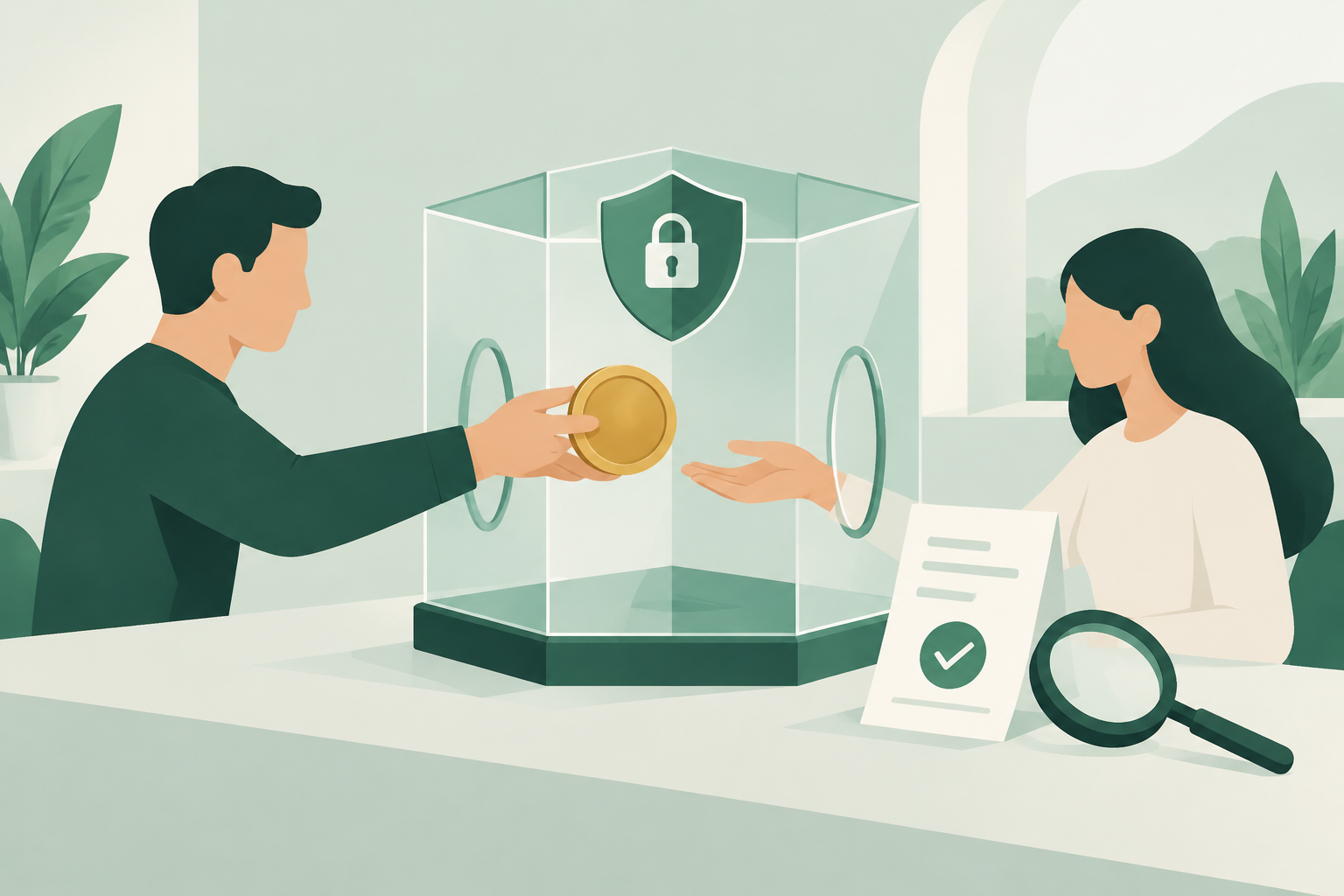
If you’re asking “is NoOnes safe?”, the honest answer is that you should not treat it as risk-free or assume every offer is trustworthy. Whether a particular trade is sensible depends on the platform’s current safeguards, the counterparty, and the payment method. This review does not independently verify NoOnes’ current security or operating status, so it is not a blanket endorsement—or an accusation that the service is unsafe.
The useful question is more specific: what could go wrong with your trade, and what protection would actually help? This guide separates those risks, shows what to check before sending money, and explains how to compare another marketplace on the same terms.
What “safe” means on a P2P marketplace
A P2P marketplace connects people who want to exchange crypto and payment. That creates several distinct risks, and solving one does not solve the others.
Platform and account risk
You need to know whether you can access your account, withdraw your assets, and reach support when something breaks. Check the platform’s current terms, account restrictions, withdrawal rules, and security settings before depositing.
Account protection matters separately. A legitimate platform cannot make a stolen password harmless. Look for authenticator-based two-factor authentication, understand which actions it protects, and secure the email account used for recovery.
Counterparty and payment risk
An established marketplace can still contain dishonest traders. Someone may provide a fake payment receipt, ask you to pay a different recipient, or pressure you to move the conversation elsewhere.
Payment methods also behave differently. A bank transfer, PayPal payment, mobile-money transfer, and gift card do not carry identical evidence requirements or reversal risks. Check your provider’s rules rather than assuming that a payment marked “received” can never be challenged.
Custody and dispute risk
Escrow can keep a seller’s crypto locked during a trade. It does not independently establish whether a bank payment is genuine, whether the payer owns the account, or whether a later reversal is possible.
Dispute handling therefore matters as much as the word “escrow.” You need to understand when a case can be opened, what evidence is required, and whether there are fees or waiting periods.
How to evaluate NoOnes without relying on hype
Treat a review as a starting point, not a substitute for current information. Features, fees, supported locations, and account requirements can change.
Before using NoOnes, verify these points through its official website and help resources:
- Eligibility: Is your country supported, and what identity checks apply to trading and withdrawals?
- Escrow rules: When is crypto locked, and what actions release or cancel it?
- Total costs: What trading, withdrawal, payment-provider, or currency-conversion costs apply?
- Dispute access: When can you escalate, and what evidence will support your case?
- Account security: Which protections are available for login, recovery, withdrawals, and crypto releases?
- Withdrawal conditions: Are there limits, reviews, or holds that could affect access to your funds?
Save the relevant terms before trading. If the answer to an important question is unclear, ask support before depositing rather than discovering the rule during a disagreement.
How much weight should you give reviews?
Look for specific, recent accounts that distinguish a platform problem from a counterparty problem. “My withdrawal is restricted” and “a trader sent a fake receipt” describe different failures and require different investigations.
Give more weight to a clear sequence of events, the payment method used, and the eventual resolution than to a star rating alone. A single complaint does not prove a platform is fraudulent; a positive testimonial does not prove your trade will be safe.
This article does not report firsthand NoOnes testing or verify its current fees, dispute performance, or security controls. Those limits matter when interpreting the verdict.
Warning signs that should stop a trade
A competitive exchange rate is not enough reason to accept unclear or changing terms.
Pause if a counterparty:
- Asks you to leave the platform’s trade chat for payment instructions.
- Requests payment before the trade is active and escrow is confirmed.
- Changes the recipient after you have started.
- Tells you to mark a payment as sent before you actually send it.
- Asks you to cancel after you have paid.
- Uses a receipt or screenshot as the only proof that money arrived.
- Claims you must release crypto before a payment can clear.
- Requests your password, authentication code, or recovery information.
Some discrepancies may have an innocent explanation. The safe response is still to stop and obtain clarification through official channels—not improvise under time pressure.
For sellers, verify payment inside your own payment account before releasing crypto. Do not rely on a buyer’s screenshot, email, or message. Even an independently confirmed receipt of funds may still carry payment-method-specific reversal risk.
A practical step-by-step first-trade check
1. Secure your access
Reach the service through an independently verified address, not an unsolicited support message or advertisement. Use a unique password and enable the available two-factor protections. Never disclose authentication or recovery codes to someone claiming to help.
2. Read the exit rules first
Check withdrawal requirements, supported networks, minimums, and fees before funding an account. Decide how you will move crypto out afterward. A trading fee alone does not tell you the cost of a complete transaction.
3. Choose a payment method you understand
Read both the offer terms and your payment provider’s rules. Understand settlement status, potential reversals, and available proof of payment. If the method is unfamiliar, research it before opening a time-limited trade.
4. Examine the offer, not just the profile
Where available, inspect completed-trade history, relevant feedback, and verification indicators. Then read the specific offer for recipient details, permitted account names, limits, and additional conditions. A badge is useful context, not a guarantee.
5. Start with a limited test
Choose an amount you can afford to have temporarily inaccessible, while accounting for fees. Confirm that the trade is active and the crypto is in escrow before paying. Check the recipient and amount carefully before authorizing payment.
6. Keep the evidence together
Keep trade instructions and messages on-platform. Retain your payment reference, receipt, and relevant transaction status. Mark payment as sent only after sending it. Avoid sharing unrelated financial information or account credentials.
7. Escalate rather than negotiate around safeguards
If payment is sent but crypto is not released, follow the platform’s dispute procedure. Do not make a second payment simply because the counterparty says the first one failed. If selling, do not release while payment remains unverified.
A successful small trade tests one transaction path. It does not guarantee that a larger trade, another counterparty, or a different payment method will behave the same way.
How VouchEx compares on concrete trade rules
If you are considering alternatives, compare disclosed controls rather than assuming another brand is automatically safer. Our NoOnes alternative guide is a starting point, but the decision should come down to the rules relevant to your transaction.
VouchEx is a P2P marketplace for USDT on TRC-20 and Bitcoin. Every trade uses escrow: the seller’s crypto stays locked until the seller confirms receipt of payment.
Its stated costs and timing rules are:
- Trading fees: 1% from the buyer and 1% from the seller per completed trade.
- Deposits: Free.
- Withdrawals: $2 for USDT and $5, charged in BTC, for Bitcoin.
- Buyer payment window: 15 minutes.
- Disputes: Can be opened three hours after a trade starts; the opener pays 1% of the trade.
- Resolution target: Moderators aim to resolve disputes within two hours. That is a target, not a guaranteed deadline.
Those details have practical consequences. A fixed withdrawal fee matters more on a small purchase, and the dispute-opening wait means escalation is not immediately available. An unfamiliar payment method could also be difficult to navigate within the payment window.
VouchEx offers optional authenticator-app 2FA for withdrawals and releases, plus ID verification for verified badges. Merchants lock a refundable $200 USDT deposit to post offers; refunds require a seven-day wait and no open disputes. These controls add accountability, but neither a deposit nor a badge guarantees honest behavior.
Hundreds of payment methods are available in many local currencies, including UPI, IMPS, bank transfer, PayPal, mobile money, and gift cards. Availability does not make every method equally suitable. Compare actual terms in the marketplace, and consult VouchEx help before trading if a rule is unclear.
Verdict: choose a trade you can verify
There is not enough independently verified, current information in this review to give NoOnes an unconditional safety endorsement. Equally, that limitation is not evidence that it is a scam.
Proceed only when you understand the platform’s current rules, can verify escrow and payment details, and have a workable dispute path. If a counterparty asks you to bypass those safeguards, walk away. Apply that same standard to NoOnes, VouchEx, and any other P2P marketplace.
FAQ
Is NoOnes safe for beginners?
Beginners should verify its current protections and requirements before trading. Use a familiar payment method, secure the account, and start with a limited amount. This review does not independently confirm NoOnes’ current security controls or suitability for your location.
Does escrow prevent every P2P scam?
No. Escrow can hold crypto during a trade, but it does not eliminate phishing, account takeover, fraudulent payment evidence, or payment reversals. Correct use matters: releasing crypto based on a screenshot can defeat the protection you expected.
Should I trust a verified trader?
Treat verification as one signal, not a promise. Review the actual offer, relevant feedback, recipient details, and payment requirements. Even a well-presented profile should not persuade you to ignore platform rules or accept last-minute changes.
What should I do if I paid but have not received crypto?
Keep the trade record intact, retain payment evidence, and use the platform’s official dispute process when eligible. Do not cancel or send additional money merely because the counterparty requests it. Follow official support instructions rather than private messages from supposed agents.
Is VouchEx automatically safer than NoOnes?
No automatic ranking is justified here. VouchEx’s stated escrow, fees, dispute rules, and account protections provide concrete comparison points. A fair safety comparison also requires current, verified NoOnes information and an assessment of your payment method and counterparty.
Start Trading on VouchEx with 0% Listing Fees
Explore the open P2P software protocol.