
How to become a p2p crypto merchant: A Practical Plan
Becoming a P2P crypto merchant starts with a focused offer, realistic pricing, and a reliable payment-checking process. Follow this practical plan to prepare your capital, handle trades safely, and decide when to grow.
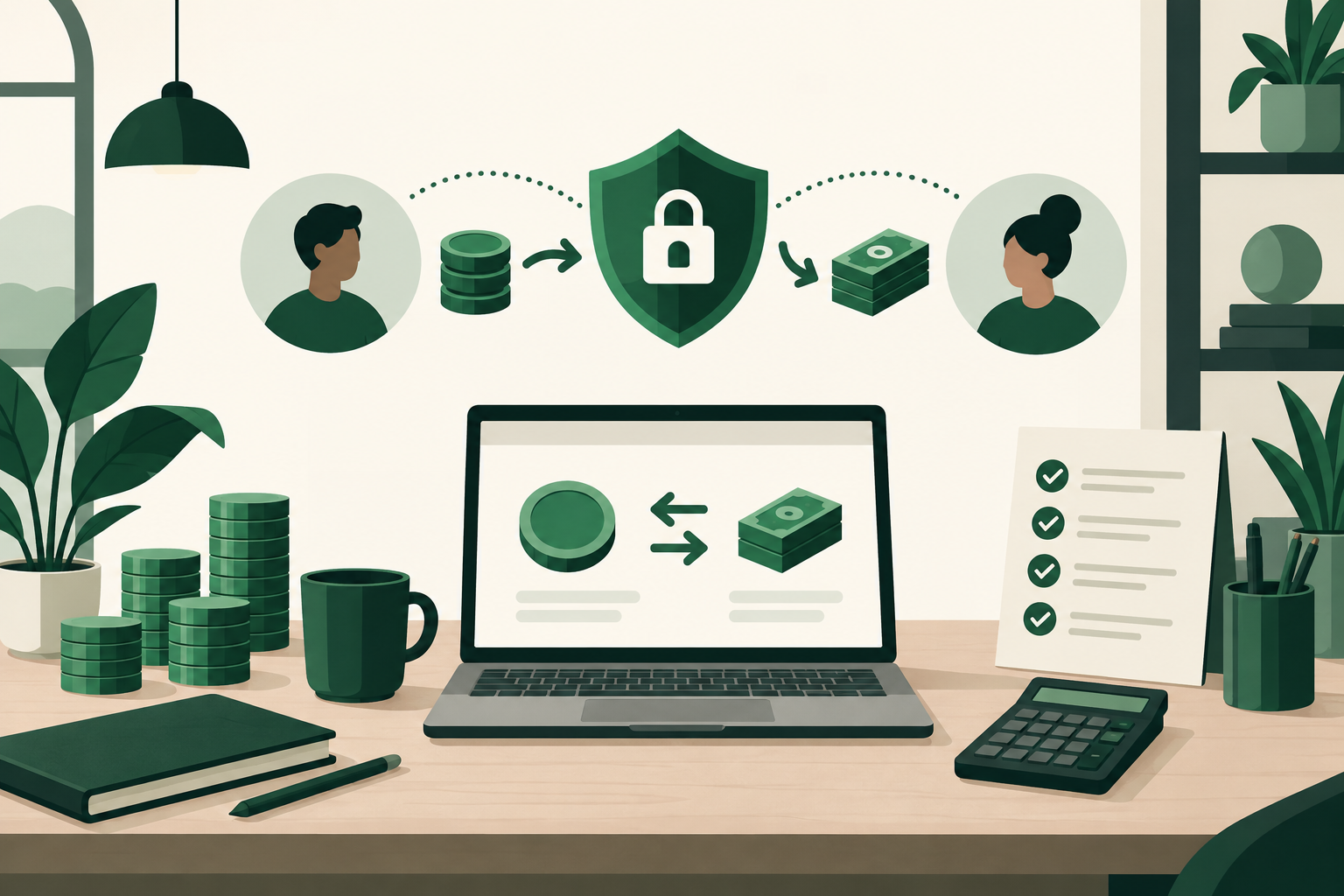
To become a P2P crypto merchant, check your local legal requirements, choose a cryptocurrency and payment method, prepare trading funds, secure your account, and publish a clearly priced buy or sell offer. Then build a repeatable process for checking payments, releasing crypto, and recording results. On VouchEx, anyone can post offers for free without a merchant deposit—but sustainable trading still requires capital, careful pricing, and disciplined payment checks.
What you need before your first offer
A P2P merchant provides a reliable way for other people to exchange local money and cryptocurrency. Your job is not simply to buy low and sell high: you also need to be available, communicate clearly, and handle payments consistently.
Prepare these essentials before going live:
- Trading capital: Crypto for sell offers, local-currency funds for buy offers, or both if you plan to trade in both directions.
- An appropriate payment account: Check whether your bank or payment provider permits your intended activity and transaction volume.
- A narrow starting market: One cryptocurrency, one currency, and a payment method you understand.
- A written operating checklist: Know what you will verify before paying or releasing crypto.
- A recordkeeping system: Track trade amounts, fees, payment references, and outcomes securely.
On VouchEx, the available crypto assets are USDT on TRC-20 and Bitcoin. Choose based on customer demand, your ability to replenish inventory, and your comfort with price and transfer risks—not simply the highest advertised margin.
Step by step: Build your merchant operation
1. Check the rules where you operate
Repeatedly buying and selling crypto as a business may carry different obligations from occasional personal trading. Depending on your jurisdiction and business model, registration, licensing, anti-money-laundering controls, tax reporting, or consumer-protection requirements may apply.
Check official guidance and seek qualified advice where needed. Also review your payment provider’s terms; permission to hold an account does not automatically mean permission to use it for commercial crypto trading.
A marketplace account or verified badge does not replace your own compliance obligations.
2. Define a service you can deliver reliably
Start with a specific proposition: which asset you trade, which currency you accept, how customers pay, and when you are available.
VouchEx supports hundreds of payment methods, including UPI, IMPS, bank transfer, PayPal, mobile money, and gift cards, across many local currencies. Availability does not mean those methods have identical risks.
Evaluate each method for:
- Payment confirmation and settlement behavior.
- Reversal, chargeback, or unauthorized-payment exposure.
- Sender information visible to you.
- Provider fees, transaction limits, and account restrictions.
- Evidence available if a payment is disputed.
For your first offers, prefer a method whose records you can independently interpret. Do not assume a payment option is safe merely because it is familiar or popular.
3. Secure and prepare your account
You can create a VouchEx account before preparing your first offer. Use a unique password and enable the optional authenticator-app two-factor authentication, which protects withdrawals and releases.
VouchEx offers ID verification for verified badges. Treat a badge as an identity-related signal, not a guarantee that every payment or transaction is risk-free.
For crypto deposits, check the asset, network, and destination carefully. VouchEx supports USDT on TRC-20; do not assume a USDT transfer on another network is interchangeable. Deposit only funds you can afford to have temporarily unavailable during trading or a dispute.
4. Separate working capital from reserves
“No merchant deposit” means you do not need to place a separate merchant deposit to post offers. It does not mean you can run an operation without inventory or payment funds.
Divide available capital by purpose:
- Crypto inventory: Funds available for sell trades.
- Payment funds: Local currency available for buy trades.
- Operating reserve: Money for fees, replenishment, and unexpected delays.
Avoid committing every available unit of capital at once. Crypto locked in an active trade is not available for another customer, and a delayed payment can disrupt your next purchase.
Set trade sizes around your liquidity and payment-provider limits, not the largest order you hope to attract.
5. Price for net profit, not the visible spread
Review comparable listings in the VouchEx marketplace, matching the asset, currency, payment method, and trade size. A price from a different payment route may reflect costs or risks that do not apply to yours.
VouchEx charges 1% to the buyer and 1% to the seller per completed trade. Deposits are free. Withdrawal fees are $2 for USDT and $5, paid in BTC, for Bitcoin.
If you buy inventory and later sell it through separate completed trades, account for your buyer-side fee on the purchase and your seller-side fee on the sale. Do not budget only for the final sale.
A useful planning formula is:
Net trading result = sale proceeds − inventory cost − applicable trading fees − payment and conversion costs − allocated withdrawal costs − losses.
Also consider the cost of replacing the inventory you sell. A trade can look profitable against yesterday’s purchase price while leaving you unable to replenish the same quantity today.
6. Publish clear, usable offer terms
Your offer should answer the buyer’s or seller’s practical questions before a trade starts. Include:
- The asset and local currency.
- The accepted payment method.
- Your minimum and maximum trade amounts.
- Payment instructions and relevant sender requirements.
- Your availability and any legitimate verification expectations.
Use plain language. Avoid confusing conditions, unnecessary personal-data requests, or promises of instant completion that you cannot consistently meet.
Check the merchant page for VouchEx merchant information, and review the current offer form before publishing. Make sure your advertised terms match the process you can actually deliver.
7. Handle each trade with the same checklist
Every VouchEx trade is protected by escrow: the seller’s crypto is locked until the seller confirms receiving payment. Escrow protects the crypto leg of the exchange, but it cannot make a reversible external payment irreversible.
When buying:
- Read the offer terms before starting.
- Check the amount and payment instructions carefully.
- Pay within the 15-minute buyer payment window.
- Retain the payment reference and relevant receipt.
- Do not claim to have paid before sending payment.
When selling:
- Check your own bank or payment-provider account directly.
- Match the amount, reference, and available sender details to the trade.
- Investigate mismatches, unexpected third-party payments, or pending status before proceeding.
- Release only after confirming receipt—not because someone supplies a screenshot or applies pressure.
A receipt is supporting evidence, not a substitute for checking your own account. Even a payment shown as received may remain subject to reversal under the payment provider’s rules.
Prepare for delays and disputes before they happen
Write down how you will respond to missing payments, incorrect amounts, mismatched sender information, and requests to change payment destinations.
Do not improvise a refund to a different account just because a counterparty requests it. Check the appropriate platform and payment-provider process first, and preserve relevant records.
On VouchEx, disputes can be opened 3 hours after a trade starts. The person opening the dispute pays 1% of the trade, and moderators aim to resolve disputes within 2 hours. That resolution time is a target, not a guarantee.
The buyer’s 15-minute payment window and the dispute-opening threshold are separate rules. Do not assume you can open a dispute immediately when the payment window ends.
Keep evidence organized and consult the help section for guidance. Do not release crypto merely to end an uncomfortable conversation.
Measure consistency before increasing volume
Your first goal should be a process you can repeat without guessing. After each completed trade, record:
- Asset quantity and local-currency amount.
- Acquisition cost, sale proceeds, and applicable fees.
- Payment and conversion costs.
- Time spent handling the trade.
- Delays, disputes, and payment irregularities.
- Remaining crypto inventory and payment funds.
Review actual net results rather than revenue alone. More completed trades do not necessarily mean more profit if payment costs, losses, or manual work rise faster.
Increase offer sizes or add payment methods only when your current process is stable. If every trade needs an exception, refine the terms, pricing, or payment route before attracting more customers.
FAQ
How much money do I need to become a P2P crypto merchant?
There is no universal starting amount. You need enough crypto or local currency for your intended trade sizes, plus a reserve for fees and delays. VouchEx has no merchant deposit, and posting buy or sell offers is free. Trading itself still requires funds.
Do I need a license to trade as a merchant?
That depends on your location and activity. Commercial or repeated trading may trigger obligations that do not apply to an occasional personal transaction. Check local rules and payment-provider terms before publishing offers; platform access is not proof of legal authorization.
How do P2P merchants make money?
Typically, they seek a spread between acquisition cost and sale proceeds. Whether that produces a profit depends on trading fees, payment costs, inventory replacement prices, losses, and operating expenses. A competitive advertised price is not necessarily a profitable one.
Is escrow enough to make merchant trading safe?
No. Escrow locks the seller’s crypto until they confirm receiving payment, but external payment risks remain. Independently verify payments, understand reversal exposure, protect your account, and never release based only on screenshots or promises.
Should I start with USDT or Bitcoin?
Choose the asset you understand and can replenish reliably. USDT is designed to track the US dollar but still carries issuer and depegging risks; Bitcoin’s price can move materially while you hold inventory. VouchEx supports USDT on TRC-20 and Bitcoin. Start with one before expanding.
Start Trading on VouchEx with 0% Listing Fees
Explore the open P2P software protocol.