
crypto chargeback scam p2p: How to Protect Your Funds
A P2P chargeback scam can leave a seller without the crypto or the payment. Learn what escrow protects, which payment signals matter, and how to respond without making the loss worse.
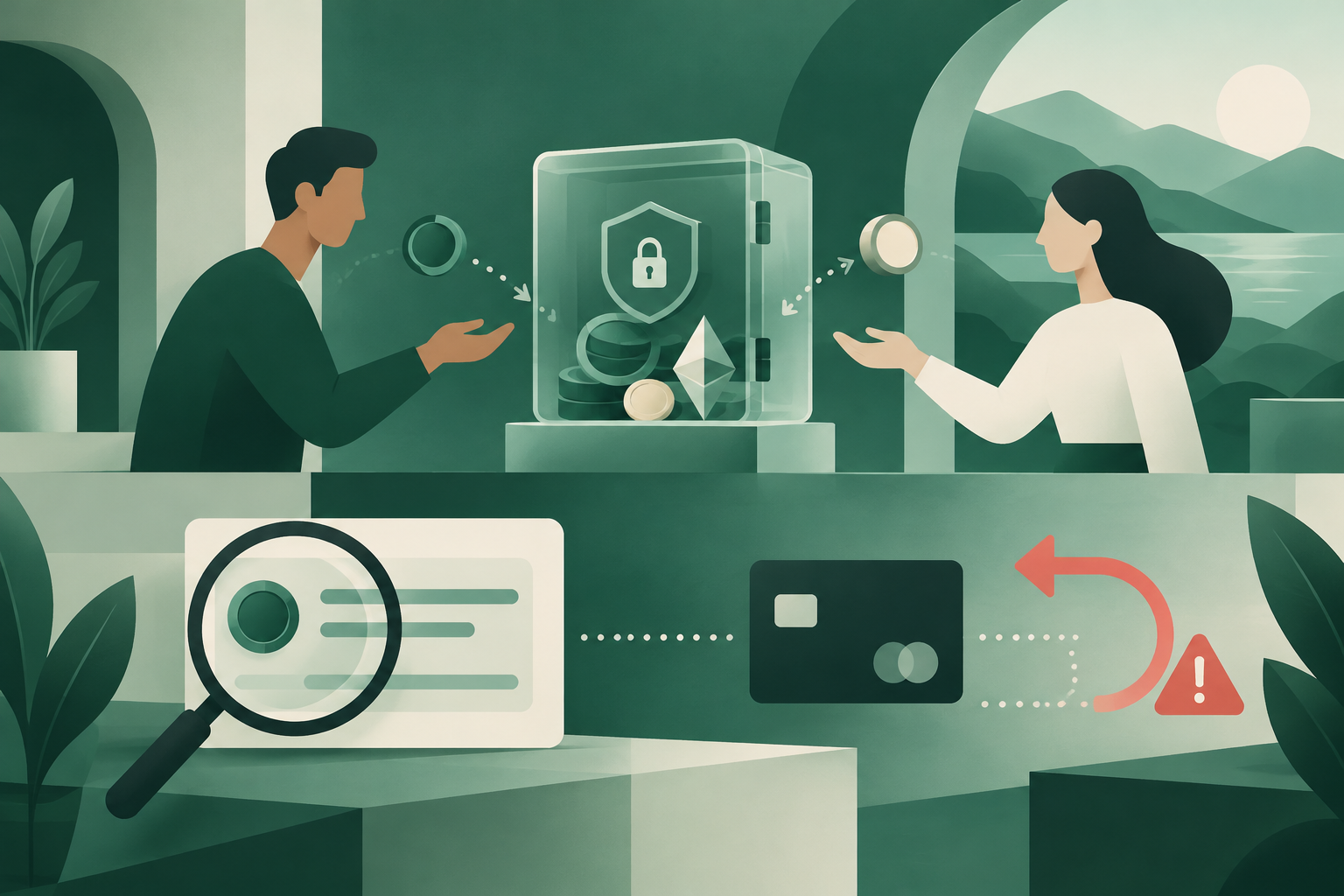
A crypto chargeback scam in P2P trading happens when someone receives your cryptocurrency and then fraudulently disputes or reverses the payment used to buy it. The main defense is to assess the payment method’s reversal risk, check the actual incoming transaction, and investigate payer mismatches before releasing crypto. Escrow protects crypto before release; it does not make an external payment irreversible afterward.
This guide explains how the scam works, what to check during a trade, and what to do if a payment is challenged later.
How a P2P chargeback scam works
In a typical scenario, a buyer agrees to purchase crypto and sends payment through an external service. The seller sees the payment and releases the crypto. The buyer then claims the payment was unauthorized, or raises another dispute with the payment provider.
If that provider reverses the payment, the seller may lose both the money and the crypto. Recovering released crypto is a separate problem from defending the payment dispute.
There are several variations:
- Deliberate reversal: The buyer authorizes payment, receives crypto, and later falsely disputes the transaction.
- Stolen payment account: A scammer pays using someone else’s account. The actual account holder later reports unauthorized activity.
- Third-party payment setup: The scammer persuades an unrelated person to pay the seller, while the scammer receives the crypto.
- Refund diversion: The buyer claims a payment mistake and asks the seller to return money to a different account, potentially leaving the original payment exposed to reversal too.
Not every reversed payment is fraud. Account compromises, genuine mistakes, and legitimate disputes happen. Focus on verifiable facts rather than trying to prove someone’s intent during a trade.
A fake receipt is different—but equally dangerous
With a fake receipt scam, the seller releases crypto even though no payment arrived. With a chargeback scam, a real payment may arrive and then be challenged later.
Checking your account catches many fake-receipt attempts. It does not eliminate the risk of a later reversal. You need both receipt verification and payment-risk assessment.
What escrow protects—and what it cannot
VouchEx is a peer-to-peer marketplace for USDT on TRC-20 and Bitcoin. Every trade is protected by escrow: the seller’s crypto is locked until they confirm they received payment.
That creates an important checkpoint. A buyer’s screenshot, urgent message, or claim that payment was sent should not replace your own verification.
However, escrow and payment finality are different things:
- Escrow controls the crypto while it remains locked in the trade.
- The payment provider controls the external payment under its own rules.
- Releasing crypto does not remove payment-dispute rights or prevent an unauthorized-payment investigation.
The practical lesson is to use escrow as a decision point, not as insurance against every event after release. A completed trade is not proof that the payment can never be questioned.
Assess the payment method before accepting an offer
Payment methods have different dispute processes, account restrictions, and fraud risks. Their rules can also vary by country and transaction type.
VouchEx supports hundreds of payment methods, including UPI, IMPS, bank transfer, PayPal, mobile money, and gift cards, in many local currencies. Availability is not a guarantee that every method is equally suitable for your situation.
Before choosing an offer in the marketplace, ask:
- Does the provider permit this type of transaction?
- Can the sender dispute it, and on what grounds?
- Does any seller protection actually cover cryptocurrency transactions?
- Can you see enough payer information to assess who sent the money?
- What records would you need if the payment were challenged?
Bank transfers may not follow the same chargeback process as card payments, but they can still be subject to fraud investigations, freezes, or recovery attempts. Gift cards introduce different risks, including stolen value and redemption disputes.
Do not treat “not a card payment” as “impossible to reverse.” Check the specific provider’s current terms instead of relying on a buyer’s assurances.
Step by step: reduce risk before releasing crypto
1. Set clear payment conditions before the trade
Specify the accepted method, currency, and amount. Make clear that unexplained third-party payments are not acceptable and that payment must be verified before release.
Your conditions cannot override banking rules or payment-provider policies. Their purpose is to reduce ambiguity and help identify arrangements you should decline.
Enable VouchEx’s optional authenticator-app 2FA, which protects withdrawals and releases. It helps protect your account, although it does not prevent a payer from disputing a payment.
2. Look for mismatched identities and unusual routing
Compare the payer information available from the payment provider with the buyer information available to you. An unexplained mismatch needs investigation, not an automatic accusation.
Be cautious if the buyer says:
- “My customer will pay you directly.”
- “The money is coming from several accounts.”
- “Refund the difference to this other account.”
- “Ignore the sender’s name and release now.”
Business accounts and naming conventions can create legitimate differences. If you cannot establish a reasonable explanation, do not treat the payment as verified merely because the amount matches.
VouchEx offers ID verification for verified badges. A badge can add context, but it does not establish ownership of every payment account a person might use.
3. Check the transaction through your own account
Open your bank or payment app independently. Do not follow a buyer-supplied login link or rely on an email claiming funds have arrived.
Check:
- The incoming amount and currency.
- The transaction reference and time.
- The sender information, where available.
- Whether the payment is pending, held, or shown as completed.
- Any warning or restriction attached to the transaction.
A screenshot is supporting evidence, not confirmation. An available balance is more informative, but it still does not guarantee immunity from a later dispute.
4. Pause when the payment does not fit the agreement
Do not release crypto just to stop pressure from the buyer. Explain the specific issue factually: a missing payment, unexplained payer name, pending status, or incorrect amount.
Do not improvise by sending money elsewhere or treating cancellation as a refund. If money has arrived but the trade cannot safely proceed, seek guidance on handling both sides of the transaction.
On VouchEx, buyers have a 15-minute payment window. That window is a trade deadline—not proof that an external payment becomes irreversible after 15 minutes.
5. Preserve evidence and use the dispute process
Keep the offer terms, trade identifier, relevant conversation, payment reference, and transaction details. Use official statements or transaction exports where available. Preserve originals and avoid editing evidence in ways that remove context.
VouchEx disputes can be opened three hours after a trade starts. The opener pays 1% of the trade, and moderators aim to resolve disputes within two hours. That is a resolution target, not a guarantee.
If a concern arises before dispute opening is available, consult VouchEx help rather than releasing just to end the disagreement. Platform moderation cannot guarantee that an outside payment provider will uphold the payment.
6. Release only after resolving the checks
Confirm receipt only when the payment details align with the agreement and any concerns have been resolved. Keep your records after completion in case the payment is questioned later.
There is no universal waiting period that makes every payment safe. The relevant questions are the method’s rules, the transaction’s status, and whether the payment’s origin makes sense.
If a payment is reversed after release
Act promptly, but avoid creating a second loss.
- Verify the notice independently. Open the provider’s app or website directly. Confirm the dispute reference, stated reason, and response deadline.
- Respond through the provider’s official process. Supply an accurate timeline and relevant transaction evidence. Never fabricate an invoice or misdescribe a crypto sale.
- Report the trade to VouchEx. Include the trade identifier and reversal information. Do not assume a platform report also answers the bank’s dispute.
- Avoid a separate refund while the dispute is unresolved. Ask the provider how to prevent duplicate reimbursement. Never refund to an unrelated account on the buyer’s instructions.
- Secure accounts if compromise is suspected. Review access, change affected credentials, and enable available authentication protections.
For suspected theft or identity misuse, consider reporting through the appropriate local authorities. Recovery depends on the circumstances and provider rules; neither a report nor a blockchain transaction record guarantees reimbursement.
Build a repeatable release checklist
Before every release, ask: Did the money arrive, does the payer make sense, and do I understand the remaining reversal risk? If any answer is unclear, investigate before confirming receipt.
When you create a VouchEx account, enable optional 2FA and choose payment methods you understand. A clear process is more useful than a blanket promise that escrow makes fraud impossible.
FAQ
Can a buyer charge back Bitcoin or USDT itself?
A bank-style chargeback applies to the external payment, not the cryptocurrency transfer. The risk is that the buyer receives crypto while the payment used to purchase it is later reversed. Completed on-chain transfers generally cannot be undone through a bank dispute.
Does escrow prevent a chargeback after crypto is released?
No. Escrow locks the seller’s crypto before release. Once released, it does not control the external payment provider’s dispute process or guarantee reimbursement if that provider reverses the payment.
Is a completed bank payment safe to accept?
A completed status is useful evidence that payment arrived, but it is not a universal guarantee against fraud-related action. Review the sender, transaction details, and your bank’s rules. Investigate unexplained third-party payments before releasing crypto.
How long should I wait before releasing crypto?
There is no single safe waiting period for every method. Verify receipt and resolve warning signs rather than relying on an arbitrary delay. VouchEx’s 15-minute payment window and three-hour dispute-opening threshold are not payment-finality guarantees.
What evidence helps when a payment is disputed?
Keep the trade terms, conversation, payment reference, payer details available to you, transaction records, and evidence of crypto release. Follow the provider’s submission requirements and deadlines. These records support your account of events but do not guarantee a favorable decision.
Start Trading on VouchEx with 0% Listing Fees
Explore the open P2P software protocol.