
Can I Use Someone Else's Bank Account for P2P Crypto Nigeria?
Using a friend’s or relative’s bank account for a Nigerian P2P crypto trade creates risks that permission alone cannot fix. Here’s how to check payment details, handle name mismatches, and respond if money has already moved.
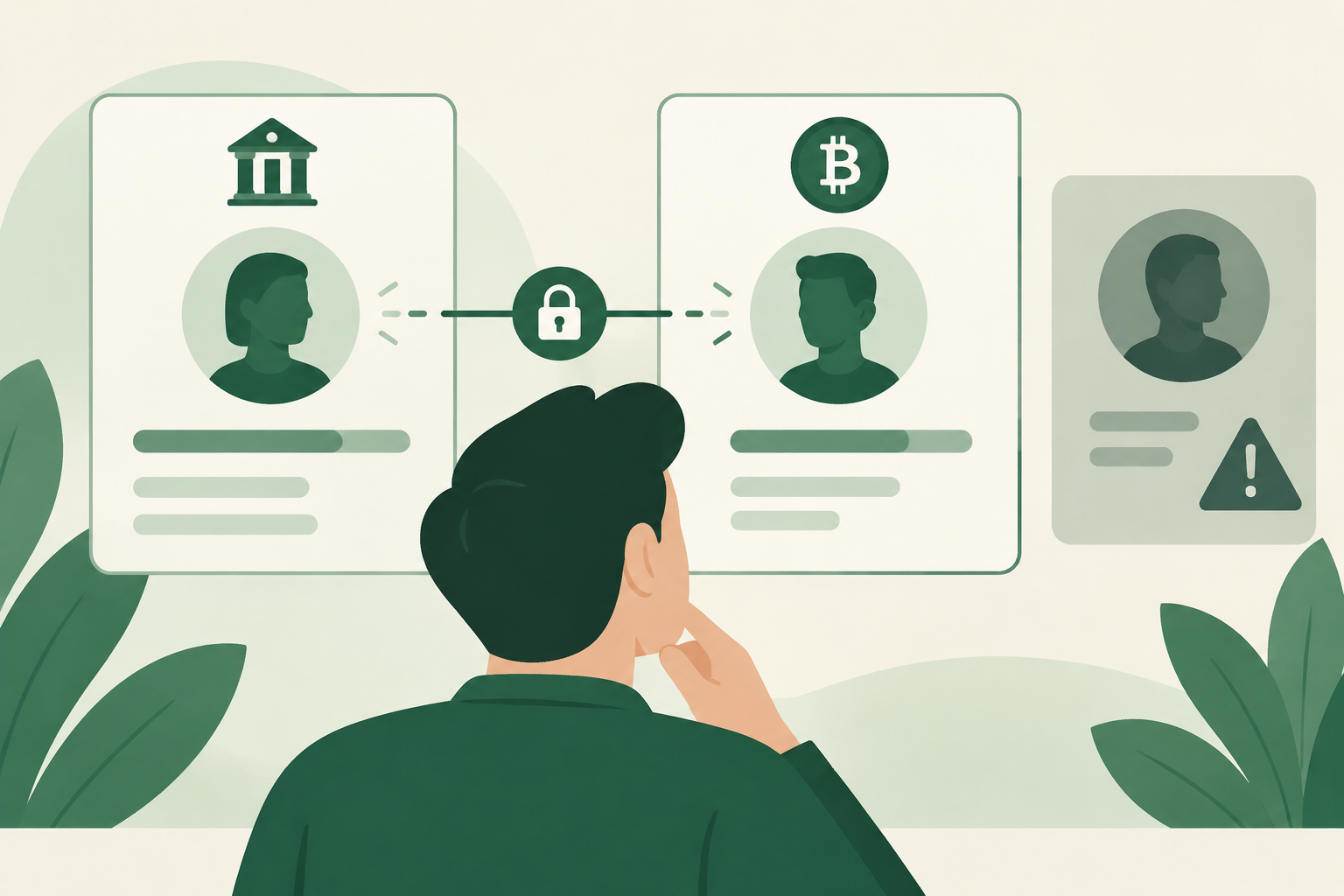
You generally should not use someone else’s bank account for P2P crypto in Nigeria. A transfer may technically go through, but that does not mean the marketplace, trading counterparty, or bank permits it. Paying from a friend’s account—or receiving sale proceeds into a relative’s account—creates a third-party payment that can complicate verification, refunds, and disputes. The safer default is an account you control in your own name, with any mismatch clarified before money moves.
What counts as a third-party payment?
A third-party payment involves a bank account holder who is not the person conducting that side of the crypto trade.
Common examples include:
- You buy USDT, but your brother transfers the naira to the seller.
- You sell Bitcoin, but ask the buyer to pay your partner’s account.
- A buyer says their customer will pay you directly.
- A seller lists one beneficiary, then asks you to send money to another person.
Permission from the account holder does not automatically make these arrangements acceptable. Your friend may agree to help, while the seller’s terms or marketplace rules still prohibit that payment route.
A shortened name or omitted middle name is different from a completely unrelated account holder. However, neither should be resolved by guessing.
Why using another person’s account creates risk
Payment and trade records no longer line up
A straightforward trade connects the marketplace participant, bank account holder, payment amount, and transaction reference.
When someone else pays, the seller must reconcile two identities: the person requesting crypto and the person sending money. A receipt alone does not explain that relationship or establish that the sender knowingly authorised the crypto purchase.
For a buyer, paying a beneficiary unrelated to the seller creates a similar problem. If something goes wrong, your bank statement shows payment to someone other than the person you negotiated with.
You can become part of a payment scam
Consider a buyer who says a customer will send payment on their behalf. That customer could have been told they were paying for something entirely different.
You receive the money and release crypto to the buyer. Later, the sender complains that they never received the goods they expected. Your bank account is now connected to a transaction you cannot fully explain.
Not every third-party payment is fraudulent. The problem is that you cannot reliably distinguish a harmless favour from a deceptive arrangement using chat messages and screenshots alone.
Refunds become more complicated
If a trade cannot proceed, who should receive the refund: the marketplace buyer, the actual sender, or another account supplied in chat?
Sending money to a new destination can compound the problem. A purported refund could move funds to someone who never made the original payment, while the original sender still seeks recovery.
Do not improvise a refund to an alternative account. Seek bank and marketplace guidance, and verify the appropriate return process.
Does escrow make third-party payments safe?
Escrow helps protect the crypto leg of a trade. It does not establish who owns a bank account or guarantee that an incoming transfer will never be challenged.
On VouchEx, every trade is protected by escrow: the seller’s crypto is locked until they confirm they received payment. VouchEx is a peer-to-peer marketplace for USDT on TRC-20 and Bitcoin.
That protection does not replace payment checks. A seller should inspect the actual bank transaction, not just a screenshot, SMS alert, or buyer’s claim. A buyer should verify the beneficiary before transferring money.
Do not interpret escrow, a verified badge, or a counterparty’s willingness as automatic permission to use a third-party account. Check the applicable platform rules and offer terms. If the policy is unclear, ask through VouchEx help before starting.
A safer payment plan, step by step
1. Prepare an account in your own name
Use a bank account you control and can access directly. Confirm that you can view transaction details and obtain a transfer reference if needed.
Do not borrow someone’s banking login, use their identity documents, or give a trader access to your banking app. Account ownership cannot be fixed by sharing credentials.
If your bank account is unavailable, postponing the trade is safer than introducing an unexplained third party.
2. Read the offer before opening a trade
Check the asset, payment method, currency, amount limits, payment instructions, and any account-name requirements. On the VouchEx marketplace, assess the individual offer rather than assuming every trader accepts the same arrangements.
Confirm the overall cost as well. VouchEx charges the buyer and seller 1% each per completed trade. Account for your bank’s applicable transfer charges when deciding whether you can fund the purchase.
Do not assume that a seller agreeing in chat overrides marketplace requirements.
3. Compare names before sending money
Compare the beneficiary name displayed by your bank with the payment details supplied for the trade.
Pause if:
- The beneficiary is an unrelated person.
- The seller changes the receiving account unexpectedly.
- You are asked to split payment across several people’s accounts.
- The explanation is simply “trust me” or “everyone does it.”
For a minor spelling difference, ask for clarification through the marketplace’s trade communication channel. Do not proceed until the discrepancy is resolved consistently with platform rules.
4. Keep the payment straightforward
Make the agreed payment from your own account to the confirmed beneficiary. Keep discussions and evidence within the platform wherever possible.
Use accurate payment information. Do not invent a purchase description, falsely describe the source of funds, or follow instructions designed to mislead a bank.
VouchEx buyers have a 15-minute payment window. Resolve account questions beforehand rather than letting a countdown push you into an uncertain transfer.
5. Verify receipt before releasing crypto
If you are selling, open your banking app or another trusted bank channel yourself. Check the credited amount, sender details, reference, and transaction status.
An unfamiliar sender is a reason to pause and investigate, even if the amount matches. Do not release crypto merely because the buyer says their relative sent it.
VouchEx offers optional authenticator-app 2FA for withdrawals and releases. This adds account protection, but it cannot determine whether a bank payment is legitimate.
6. Preserve a clear record
Keep the trade identifier, offer terms, relevant messages, transfer confirmation, and bank transaction reference.
Share evidence only through appropriate support or dispute channels. Never disclose an OTP, banking password, card PIN, or wallet recovery phrase. Avoid posting unredacted bank records publicly.
What if someone is genuinely helping you pay?
A family member funding a purchase is not automatically acting dishonestly. Still, a genuine relationship does not remove the identity mismatch within the trade.
If someone is giving or lending you money, keep that arrangement separate and accurately documented. Where lawful and permitted by your bank and the marketplace, you can receive legitimate funds into your own account before deciding whether to trade from it.
This is not a way to conceal the original source of money, bypass restrictions, or move disputed funds. Do not receive and forward money for strangers. Be truthful if a bank or platform asks where funds came from.
For joint or business accounts, seek explicit clarification first. Having access to an account does not necessarily mean its displayed name satisfies a marketplace’s requirements.
Already paid from someone else’s account?
Stop making additional transfers. Explain the mismatch honestly in the trade conversation and preserve the original payment evidence.
If you are the buyer:
- Do not falsely claim the sending account belongs to you.
- Do not send a second payment just to “correct” the first without a clear, supported resolution.
- Ask support how to handle the existing payment and trade status.
- Involve the actual account holder if their bank needs information.
If you are the seller, do not release crypto while an unexplained payment mismatch remains unresolved. Do not spend the questionable funds or return them to a different account supplied under pressure.
On VouchEx, disputes can be opened three hours after a trade starts. The opener pays 1% of the trade, and moderators aim to resolve disputes within two hours. That is a target, not a guaranteed outcome or resolution time. Preserve evidence and seek help while waiting for dispute eligibility.
If you suspect an unauthorised bank transfer, contact the bank promptly as well. A marketplace dispute does not replace the bank’s own process.
FAQ
Can I use my spouse’s or sibling’s bank account with permission?
Permission alone is insufficient. The payment still comes from a different account holder. Check marketplace rules and offer terms before trading; using your own account is the safer default.
Is using someone else’s account automatically illegal in Nigeria?
You cannot determine legality from the name mismatch alone. Authorisation, source of funds, account terms, and the circumstances matter. Do not treat technical transfer success as legal approval. Seek qualified Nigerian legal advice for a specific concern.
What if my bank name has a missing middle name?
A minor formatting difference is not necessarily a third-party payment. Clarify it before paying, and ask support what evidence is appropriate. Never alter a receipt or identity document to make names appear consistent.
Can I receive crypto-sale proceeds into a business account?
Do not assume so. A business account may display a company name rather than your personal name. Confirm that the platform, bank, and offer permit the arrangement and what ownership or authorisation evidence is required.
Should I refund a third-party payment immediately?
Do not send an improvised refund, especially to a different account. Preserve the funds and evidence, contact marketplace support, and ask your bank about the appropriate return process. Pressure to refund elsewhere is a reason to slow down, not rush.
Start Trading on VouchEx with 0% Listing Fees
Explore the open P2P software protocol.